



A Surprising, Massive Gain
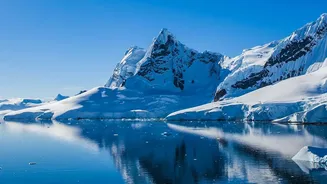
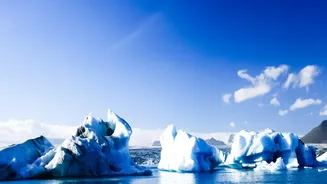
Scientists have been watching Antarctica shed ice for decades. The continent has been losing mass at an average rate of about 140 billion tons per year. So, when satellite data revealed a massive gain of approximately 695 billion tons of ice between 2021
and 2023, it was a stunning development. This event, the largest short-term mass increase ever recorded by GRACE satellites, was concentrated in East Antarctica. It temporarily slowed the continent's overall contribution to sea-level rise. However, the researchers behind the study were quick to investigate the cause and stress the temporary nature of this rebound.
The Unlikely Cause: A Tropical Connection
The culprit behind this massive snowfall wasn't a sudden Antarctic cold snap, but rather a patch of unusually warm ocean thousands of miles away. Researchers discovered that sustained warming in the tropical warm pool — where the western Pacific and eastern Indian Oceans meet — created a chain reaction. This warmth generated atmospheric waves, known as Rossby waves, that travelled towards the South Pole. This, in turn, altered weather patterns, redirecting moisture-heavy air from the mid-latitudes directly toward East Antarctica, leading to exceptionally heavy and persistent snowfall. In essence, a warming event in one part of the world paradoxically caused a massive ice buildup in another.
Ice Gain vs. Overall Ice Loss
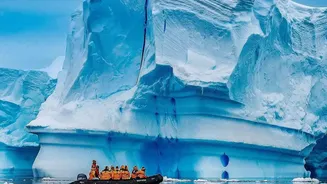
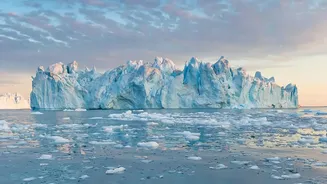
This is the most critical part of the story: the temporary gain from snowfall does not cancel out the much larger, more worrying trend. The 695-billion-ton gain is an anomaly. The long-term trajectory for Antarctica is one of significant and accelerating ice loss. This is especially true for West Antarctica and the Antarctic Peninsula, where warming ocean waters are melting the floating ice shelves from beneath. These ice shelves act like a cork in a bottle, holding back vast land-based glaciers. As they thin and break apart, the glaciers behind them accelerate their flow into the ocean, contributing directly to sea-level rise. Even during this period of heavy snowfall in the east, West Antarctica continued to lose mass.
Why This Matters for India
While Antarctica may seem remote, its fate is directly connected to coastal communities around the globe, including in India. The melting of Antarctica's land ice is a primary driver of global sea-level rise. For India, with its extensive 7,500-kilometre coastline and major metropolises like Mumbai, Chennai, and Kolkata situated on the coast, the threat is not abstract. Even small increments in sea level can lead to more frequent and severe coastal flooding, erosion, and saltwater intrusion into freshwater sources, affecting millions of lives and livelihoods. The long-term health of the Antarctic ice sheet is therefore a matter of national importance.
A Complex Climate, Not a Reversal
The study's authors and other climate scientists are unanimous on one point: this temporary gain is not a 'get out of jail free' card for climate change. Instead, it serves as a powerful illustration of the climate system's complexity and its interconnectedness. An event in the tropics can have a massive, albeit temporary, impact at the pole. This finding helps scientists refine their models and better understand the volatile nature of Earth's systems. But it doesn't change the fundamental physics: a warming planet means melting ice. This event was a brief pause, not a reversal, in a deeply concerning global trend.