






How Air Purifiers Actually Work
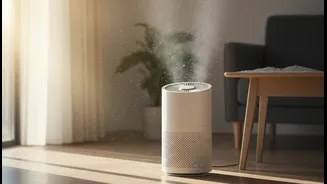
Think of an air purifier as a specialised sieve for the air in your room. Its core function is simple: a fan pulls the surrounding air into the unit, forcing it through one or more filters. These filters are designed to trap pollutants. The clean air is then
circulated back into the room. The most crucial component for fine particles is the HEPA (High-Efficiency Particulate Air) filter. A true HEPA filter is certified to capture 99.97% of particles that are 0.3 microns in size—a dimension hundreds of times smaller than a human hair. This process continuously reduces the concentration of invisible irritants floating around you. Some models also include an activated carbon filter to absorb gases and odours from cooking or chemicals.
The Enemy in the Air: What They Capture
An air purifier's main job is to combat airborne contaminants. These are tiny particles light enough to remain suspended in the air for hours. The primary targets are pollutants like PM2.5, which are fine inhalable particles from vehicle exhaust and industrial emissions that can penetrate deep into the lungs. They are also highly effective against common allergens. This includes pollen that drifts in from outside, mould spores that thrive in damp corners, and pet dander from our furry friends. For anyone in India suffering from seasonal allergies or respiratory conditions like asthma, a good air purifier can significantly reduce triggers and improve day-to-day comfort by capturing these irritants before you inhale them.
The Myth of the Dust-Free Shelf
This is where the confusion begins. While air purifiers are excellent at capturing airborne dust, they are not designed to clean surfaces. The dust you see settling on your tables, bookshelves, and electronics is composed of larger, heavier particles. This mix includes dead skin cells, fabric fibres, and dirt. Due to their weight, these particles don't stay airborne for long; gravity pulls them down onto surfaces relatively quickly. An air purifier can only capture particles that are floating in the air and get pulled into its filter system. It has no mechanism to lift settled dust off your furniture. So, even with the best purifier running 24/7, that layer of dust will still accumulate.
Your Two-Part Clean Home Strategy
The most effective approach to a dust-free home is a two-part strategy: let the air purifier handle the air, while you handle the surfaces. Think of them as complementary tools, not replacements for each other. For the best results, regular physical cleaning is non-negotiable. This means dusting surfaces with a damp microfibre cloth (which traps dust instead of sending it airborne) and vacuuming floors and upholstery. By cleaning surfaces, you remove the settled dust. If any of it gets stirred up and becomes airborne during cleaning, the air purifier is there to capture it, preventing it from resettling. This combination is what leads to a noticeably cleaner environment and better air quality.
Getting the Most From Your Purifier
To ensure your air purifier does its job effectively, a few things are key. First, placement matters. Don't hide it in a corner; place it in an area with good airflow to allow it to circulate air efficiently. Second, always choose a model with a Clean Air Delivery Rate (CADR) that matches your room size; an undersized unit will struggle to clean the air. Third, keep doors and windows closed while it's running to prevent outdoor pollutants from continuously entering. Finally, and most importantly, maintain the filters. A clogged filter can't trap particles effectively. Check the manufacturer's guidelines for cleaning pre-filters and replacing HEPA and carbon filters to ensure your machine is always performing at its best.