




A Hunter of Cosmic Explosions
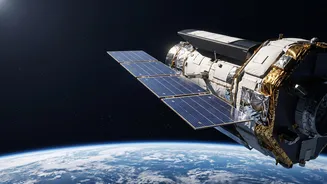
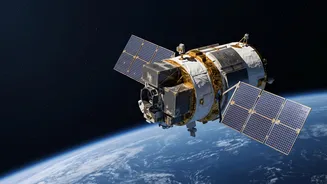
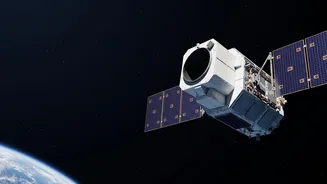
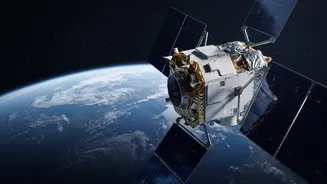
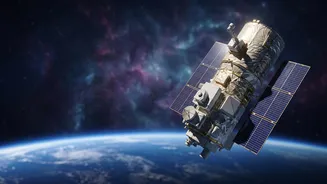
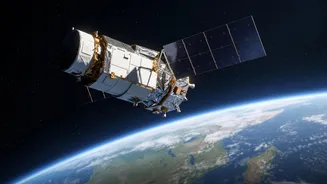
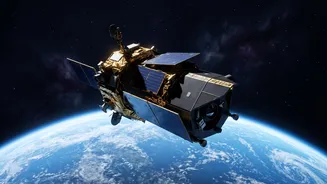
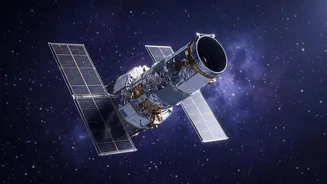
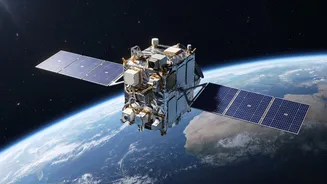
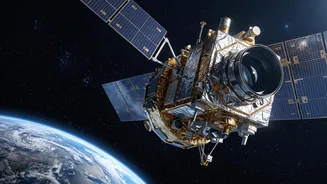
Launched in November 2004, the Swift Observatory was designed for a mission that was as simple to state as it was difficult to execute: hunt down gamma-ray bursts (GRBs). These events are the most powerful explosions in the universe since the Big Bang,
brief but incredibly intense flashes of high-energy radiation that can signal the birth of a black hole or the cataclysmic collision of two neutron stars. Swift's genius was its speed. Its trio of telescopes—working in gamma-ray, X-ray, and ultraviolet/optical light—could detect a burst and autonomously pivot to face it, often within a minute. This rapid response allowed it to capture the fleeting afterglow of these events, providing crucial data that other observatories would miss. This capability made Swift an indispensable tool for astronomers worldwide.
A Legacy Beyond Its Years
Though its primary mission was planned for only two years, Swift operated for more than 21, evolving into a versatile workhorse for all types of astronomy. It studied supernovae, comets, and active galaxies, contributing to more than 9,000 scientific papers. Swift’s discoveries reshaped our understanding of the cosmos. It located the most distant object ever observed at the time, a GRB from 13 billion light-years away, giving us a glimpse into the early universe. It also provided the first precise location for a short-duration GRB, strengthening the theory that they are caused by merging neutron stars—a discovery that helped usher in the era of multi-messenger astronomy, where events are observed in both light and gravitational waves.
The Beginning of the End
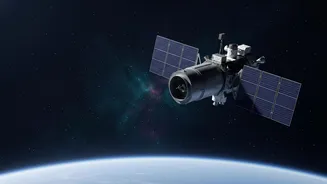
Swift's mission was not threatened by a failure of its scientific instruments, but by its decaying orbit. The spacecraft has no onboard propulsion system to maintain its altitude. In recent years, heightened solar activity heated and expanded Earth's upper atmosphere, increasing atmospheric drag on the satellite and pulling it downward faster than anticipated. Its orbit, which started at nearly 600 kilometers, had dropped significantly, and projections showed it would make an uncontrolled reentry into the atmosphere later in 2026. Faced with losing the valuable observatory, NASA decided on a bold and unprecedented course of action.
A Daring, High-Risk Rescue
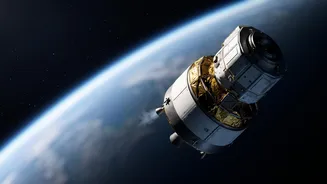
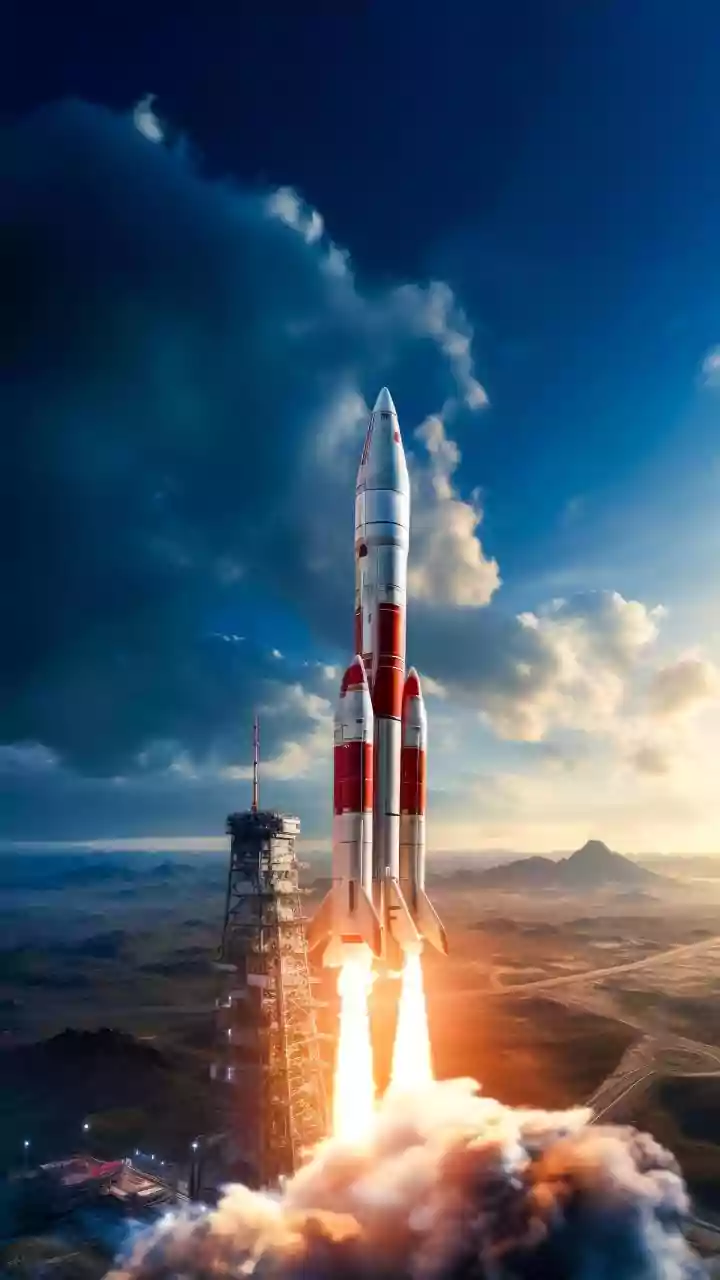
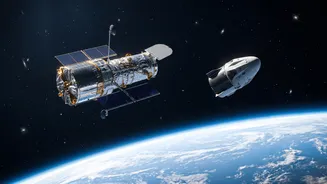
In a first-of-its-kind attempt, NASA awarded a $30 million contract to a private company, Katalyst Space Technologies, to build a robotic servicing spacecraft called LINK. Launched on July 3, 2026, the plan was for LINK to rendezvous with Swift, grab it with robotic arms, and boost it into a higher, more stable orbit to extend its life. The mission was high-risk and high-reward; Swift was never designed to be serviced in orbit, and the entire rescue mission was assembled in under a year, a remarkably fast timeline for a space mission. It represented a new model for public-private partnerships aimed at servicing and extending the life of aging satellite infrastructure.
The Final Verdict
Unfortunately, the ambitious rescue was not to be. Shortly after launch, the LINK spacecraft experienced a critical failure of its own. Two of its three reaction wheels—devices that control a spacecraft's orientation—stopped working, causing the servicer to enter an uncontrollable spin. After weeks of attempting to salvage the situation, NASA and Katalyst announced on August 19, 2026, that the rescue attempt was cancelled. Without any other plans for a boost, the Swift Observatory is now expected to burn up upon reentering Earth's atmosphere later this year. As a consolation, LINK may still attempt to approach Swift to test its rendezvous systems, gathering data that could inform future servicing missions.