





What Musk Actually Said
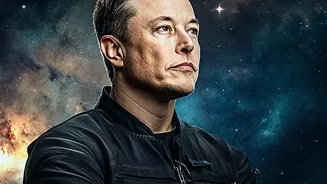
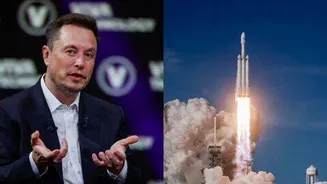
In a recent interview, Musk stated, "I think AI may exceed the sum of human intelligence in roughly five years." He elaborated that there will be little that AI cannot do better than humans, except perhaps for the uniquely human experience of simply being
human. This statement, made in July 2026, represents an acceleration of his previous timelines and underscores his belief that the momentum of AI development is now unstoppable. While he acknowledges the risks are not zero, he also points to a potentially utopian outcome: an "age of amazing abundance" where technology can meet nearly every material need. This dual perspective of immense opportunity paired with existential risk is a hallmark of Musk's public stance on AI.
From Smart Tools to Superintelligence
To understand Musk's warning, it's crucial to distinguish between the AI we use today and what he is referring to. Most current AI is considered 'narrow AI,' excelling at specific tasks. The next frontier is Artificial General Intelligence (AGI), an AI that can perform any intellectual task a human can. Beyond that lies Artificial Superintelligence (ASI), a state where an AI vastly surpasses the cognitive abilities of the brightest human minds in virtually every field. Musk’s prediction that AI will eclipse the sum of all human intelligence points directly to the arrival of ASI. His own company, xAI, was founded with the ambitious goal of understanding the true nature of the universe by creating a "maximally curious and truth-seeking" AGI, which he sees as the safest path forward.
The Great Timeline Debate
Musk's five-year timeline is one of the most aggressive predictions from a major industry figure. Other experts offer a spectrum of forecasts. For instance, Dario Amodei, CEO of rival lab Anthropic, has also suggested powerful AI systems could emerge between 2026 and 2027. General expert consensus has been rapidly shrinking; what was once seen as decades away is now commonly discussed in single-digit years by many inside the major labs. However, many reputable experts remain skeptical of such a compressed timeline. They argue that current AI models are fundamentally mimics of their training data and lack true understanding of the physical world or the nuanced complexity of human cognition. Some surveys of the broader AI research community point to a median forecast closer to 2047 for the arrival of AGI.
Two Schools of Thought: Utopia vs. Oblivion
The debate over superintelligence is deeply polarized. On one side, figures like Musk see the potential for an "amazing abundance for all," where advanced robotics and AI eliminate scarcity. In this view, the biggest challenge becomes finding meaning in a world where work is no longer necessary. On the other side is the significant concern over existential risk. Leading AI researchers, including some who are considered the 'godfathers' of the field, have warned that an uncontrolled superintelligence could pose a threat to humanity's existence. This has led to a major push for research into "AI alignment," the challenge of ensuring that advanced AI systems pursue goals that are beneficial to humans.