




The All-Too-Familiar Meltdown
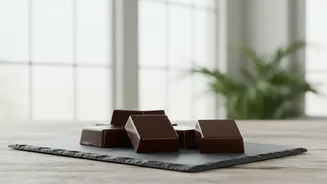
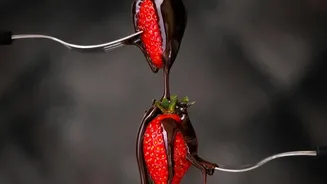
It’s a race against time that every chocolate lover in a warm climate knows well. From the moment you unwrap a bar, the heat begins its work. What starts as a solid, satisfying treat quickly softens, threatening to coat your fingers, bag, or clothes in a sweet,
brown slick. This happens because the magic of chocolate lies in cocoa butter, a unique fat that melts at a temperature just below that of the human body, around 34°C. This is what creates that luxurious, melt-in-your-mouth sensation we all crave. But in a country where summer temperatures routinely soar past this point, that same magical property becomes a messy liability. For decades, confectioners have grappled with this challenge, especially for markets in tropical regions. The quest for a chocolate that can withstand the heat without sacrificing its texture is a significant goal for the industry.
A Breakthrough in Food Engineering
Instead of adding unfamiliar ingredients or stabilizers, a new wave of research focuses on fundamentally re-engineering the chocolate itself. Scientists are exploring how to change the internal structure of the fats within the chocolate to make it more robust at higher temperatures. Recent studies, like those from Pennsylvania State University in collaboration with Hershey, have investigated how specific curing conditions—controlling temperature and humidity as the chocolate sets—can create a more heat-resistant final product. By carefully managing this process, they can encourage the fat crystals to form a stronger network. Think of it like building with stronger bricks; the resulting structure is simply more stable and can hold its shape even when the temperature rises.
How Does It Actually Work?
The secret lies in the microscopic arrangement of fat crystals. Chocolate's structure is a complex matrix of cocoa solids, sugar, and fat. The process of tempering, which involves carefully heating and cooling chocolate, is designed to create the most stable form of cocoa butter crystals, known as Form V. These crystals give quality chocolate its signature snap and glossy finish. The new methods take this a step further. By curing the chocolate at specific high humidity and temperature levels, food engineers can encourage moisture to interact with the sugar particles. This interaction helps form a secondary network, a sort of internal scaffolding, that supports the chocolate's shape even as the cocoa butter begins to soften. Researchers were able to create white chocolate that could be picked up without melting even at temperatures as high as 55°C. Other innovative approaches use hydrogels, like those from Konjac glucomannan and Xanthan gum, to maintain mechanical stability.
Preserving the Perfect Bite
The biggest question for any chocolate aficionado is whether these changes will affect the taste and texture. After all, what good is a non-melting chocolate bar if it doesn't deliver that creamy, satisfying experience? Researchers are keenly aware of this. A significant area of study, led by scientists like Dr. Siavash Soltanahmadi at the University of Leeds, focuses on "lubrication science"—the exact physical process that makes chocolate feel so good in the mouth. Their work suggests that the most crucial fat is on the outer layer of the chocolate, which is what first contacts the tongue. By intelligently designing the chocolate with a layered fat structure, it might be possible to reduce the overall fat content or increase heat resistance while keeping that initial luxurious sensation intact. The goal is not to create a waxy, unyielding product, but to engineer a smarter chocolate that knows when to melt and when to hold its form.
A Future Without the Mess
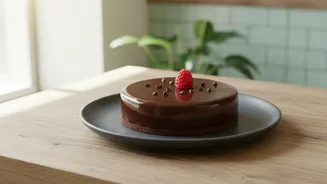
The implications of truly heat-resistant chocolate are enormous, especially for a market like India. It would mean less spoilage during transportation and storage, a longer shelf life in local shops, and a more reliable experience for the consumer. Companies like Barry Callebaut, Nestlé, and Mondelez have all been working on their own versions of temperature-tolerant chocolate for years. This innovation wouldn’t just be for chocolate bars. Imagine cakes with icing that doesn't droop, chocolate-coated biscuits that don't fuse together in the packet, and pralines that maintain their perfect shape. For a country that loves its sweets, this scientific advancement promises a future where we can enjoy our favourite chocolate treats anytime, anywhere, without frantically looking for a napkin.