




What is the Mecca Defence Agreement?
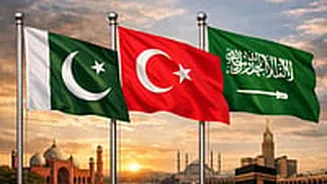
Signed in the holy city of Mecca, the agreement establishes a trilateral framework for security and defence cooperation between the three major Sunni Muslim powers. The pact’s most notable feature is its collective defence clause, which stipulates that
an armed attack on any of the three nations will be considered an attack on all. This mirrors the language of NATO's famous Article 5. The accord, formally named the “Mecca Joint Defence Agreement,” is the result of nearly a year of high-level negotiations and builds upon a previous bilateral pact signed between Saudi Arabia and Pakistan in September 2025. While officials insist the pact is purely defensive and not aimed at any specific country, its formation comes amid significant regional turmoil, including the ongoing US-Iran conflict and heightened security risks in the Red Sea.
The Key Players and Their Motivations
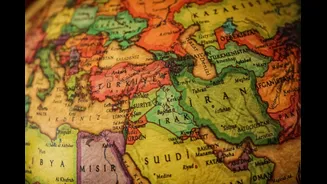
Each signatory brings unique strengths and gains distinct advantages. Saudi Arabia, the world's top oil exporter, provides financial muscle and strategic geography. For Riyadh, the pact is a form of strategic insurance, diversifying its security partnerships beyond a traditional reliance on the United States and creating a deterrent against regional threats, particularly after attacks on its infrastructure. Türkiye contributes NATO's second-largest military and a sophisticated defence industry, gaining a larger role in Gulf security and new markets for its military technology. For Pakistan, the sole nuclear power in the Muslim world, the agreement enhances its strategic importance, embeds it deeper into the Middle East's security architecture, and provides a platform to improve its global standing. Promises of Saudi investment offer a strong incentive for Pakistan's struggling economy.
A New, Non-Western Security Axis
The Mecca Agreement is more than just a piece of paper; it represents the rise of a new, non-Western-led security architecture in a multipolar world. For years, Gulf states have questioned the reliability of the US as a security guarantor, and this pact is a clear move towards regional players taking ownership of their own security. While it's not a rigid, NATO-style alliance with automatic military obligations, it provides a framework for consultation, coordination, and collective security. The cooperation is expected to include joint military exercises involving land, naval, and air forces, as well as collaboration in defence production and intelligence sharing. The pact could also expand, with Qatar already welcoming the initiative and Pakistan suggesting it could be the first of other nations to join.
What Are the Implications for India?
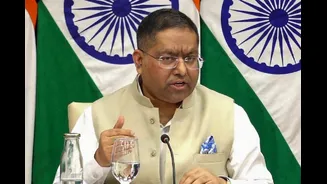
The formation of this trilateral alliance is being watched closely in New Delhi for several reasons. The agreement significantly strengthens the strategic position of Pakistan, India's archrival. The deepening defence relationship between Türkiye and Pakistan, which has included the supply of advanced drones used in past hostilities, is a major concern. The pact formalises and expands this nexus, adding the financial and strategic weight of Saudi Arabia. While India maintains strong economic ties with Riyadh, the new framework elevates Pakistan's role as a key security provider in a region vital to India's energy and economic interests. Furthermore, the alliance could impact broader strategic projects like the India-Middle East-Europe Economic Corridor (IMEC), as Türkiye has been a vocal critic of the plan and now has greater influence with Saudi Arabia, a central player in the corridor.