

Understanding Movement Feedback
Every exercise you do provides your body with feedback. This concept, known in physiology as proprioception, is your body's innate ability to sense its own position, movement, and orientation in space. It’s how you can touch your nose with your eyes closed
or walk up a flight of stairs without staring at your feet. This internal feedback loop is constantly running, with receptors in your muscles, tendons, and joints sending information to your brain. The quality of this feedback determines how well you can control your body, maintain balance, and execute movements safely and efficiently. Some workouts are specifically designed to sharpen this sense, while others prioritize different goals.
The Pilates Method: A Focus on Precision
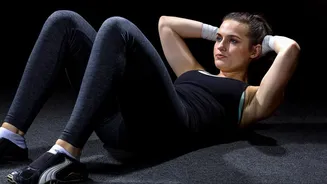
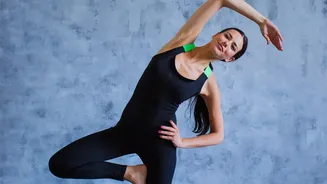
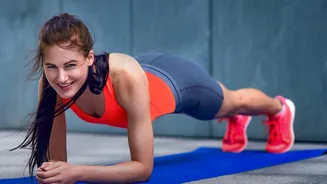
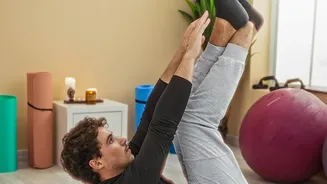
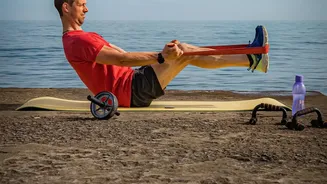
Pilates is built around enhancing body awareness. Its core principles—concentration, control, centering, and precision—are all geared toward refining that mind-body connection. The movements are typically slow and deliberate, forcing you to pay close attention to which muscles are activating, how your spine is aligned, and the quality of the motion itself. This low-impact approach strengthens the deep stabilizing muscles of the core, which support the spine and improve posture. Whether on a mat or a reformer machine, Pilates exercises are designed to provide constant, detailed feedback, retraining the body to move with greater control and efficiency, which is crucial for injury prevention and rehabilitation.
The Energy of Dance Cardio
Dance cardio, including formats like Zumba, operates on a different wavelength. The primary goal is to elevate your heart rate through continuous, rhythmic movement, providing a robust cardiovascular workout. The feedback here is more external and immediate: Are you keeping up with the music? Are you matching the instructor’s energy? The focus is on coordination, stamina, and burning calories. While dance certainly improves balance and coordination, the fast pace means there is less opportunity to concentrate on the micro-adjustments of individual muscles or perfect alignment in the way Pilates does. The feedback is about the overall performance of the movement, not the intricate mechanics behind it.
Comparing the Feedback Loop
The distinction lies in where your attention is directed. Pilates encourages an internal focus, asking you to sense how your body is positioned and which muscles are engaged. Each repetition is a chance to refine your form. Dance cardio demands an external focus; your main goal is to follow choreography and rhythm. Think of it this way: Pilates is like a meticulous editor, examining every sentence for structure and correctness. Dance cardio is like a powerful public speaker, focusing on flow, energy, and connecting with the audience. Both are effective communication, but their methods and immediate objectives are fundamentally different. One hones the mechanics, the other masters the performance.
Which Is Right for Your Goals?
Neither workout is inherently superior; the best choice depends entirely on what you want to achieve. If your primary goal is to improve posture, build deep core strength, recover from an injury, or develop a more profound sense of body control, the detailed feedback from Pilates is invaluable. It builds a strong, stable foundation. If your main objectives are cardiovascular health, calorie burn, stress relief, and a high-energy, fun experience, dance cardio is an excellent option. It’s known to boost mood through the release of endorphins in a social, engaging setting. For a truly well-rounded fitness regimen, many experts would agree that combining both can offer the best of both worlds: the structural integrity from Pilates and the heart-pumping joy of dance.