




A Deluge of Rock and Ice
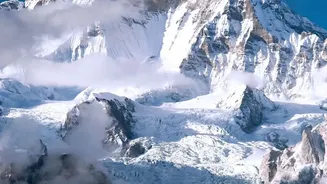
The tragic Sunday morning began when a colossal chunk of rock and ice, estimated at 27 million cubic metres, broke off a steep flank of Ronti Peak. Initially, many suspected a Glacial Lake Outburst Flood (GLOF), a common hazard in the region. However,
detailed analysis by dozens of scientists using satellite imagery and seismic data painted a different picture. The mass of rock and glacial ice plummeted from the slope, transforming into a fast-moving, destructive debris flow as the friction and energy of the fall melted the ice into water. This torrent barrelled down the Rishiganga and Dhauliganga river valleys, obliterating two major hydropower projects—the Rishiganga and the Tapovan Vishnugad—and sweeping away everything in its path.
An Autopsy of a Disaster
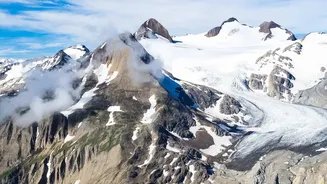
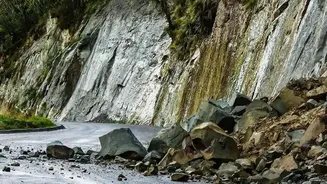
Scientists were able to quickly rule out a GLOF because there were no significant glacial lakes in the immediate vicinity. Instead, the evidence pointed to a complex cascade of events rooted in long-term instability. Satellite images revealed that a crack had been forming on the mountain years before the collapse. The event was a catastrophic rockslide that took a massive portion of a hanging glacier with it. The mixture of 80% rock and 20% ice created a uniquely destructive flow. This wasn't just a flood; it was a landslide-driven debris flow that scoured the valley walls up to 220 metres above the riverbed, carrying boulders larger than 20 metres in diameter.
A Symptom of a Warming World
While no single event can be solely attributed to climate change without extensive study, the Chamoli disaster fits a worrying pattern. The Himalayas, often called the 'Third Pole', are warming faster than many other parts of the world. This warming is causing glaciers to retreat and thin at an accelerating pace. Research shows Himalayan glaciers are melting much faster now than in previous decades, destabilising the slopes they once supported and leading to the formation of new, potentially unstable glacial lakes. This phenomenon, known as deglaciation, makes events like rock-ice avalanches more likely as the 'glue' of permafrost and ice that holds mountainsides together begins to thaw.
India's Looming Threat
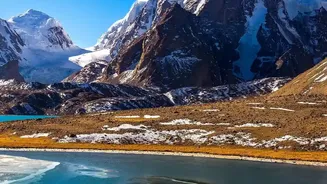
The stakes for India are immense. The Himalayan region hosts thousands of glacial lakes, with a government survey identifying approximately 200 as high-risk. These are ticking time bombs, threatening the roughly 1.65 billion people who live in the river valleys downstream of the Hindu Kush Himalaya region. The disaster in Sikkim in October 2023, when the South Lhonak Lake breached its dam, was another devastating example of a GLOF. These events, whether from lake outbursts or avalanches, pose a direct threat to downstream communities and critical infrastructure, including the numerous hydropower projects that are central to India's energy security.
The Race to Predict and Prepare
In the wake of recent disasters in both India and neighbouring Nepal, the urgency to act has grown. The Indian government's National GLOF Risk Mitigation Programme has identified 195 at-risk lakes for focused attention, including assessment, monitoring, and the establishment of early warning systems. Following a deadly flood in Nepal in August 2026, Uttarakhand's state government announced plans to deploy satellite imagery, drones, and sensor-based systems for real-time monitoring of its 13 most sensitive glacial lakes. The goal is to move from reacting to disasters to anticipating them, using modern technology to provide precious warning time for evacuations and mitigation measures.