








The Common Habit of 'Social Jetlag'
Many of us live two different lives: the disciplined weekday version and the relaxed weekend one. We push through a structured work week with early alarms, only to stay up later and sleep in on Fridays and Saturdays. This common pattern has a name: 'social
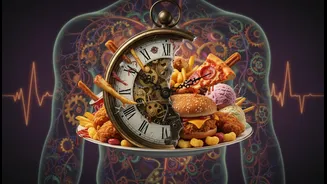
jetlag'. It describes the mismatch between our body's internal clock (circadian rhythm) and our social schedules. While it feels like a well-deserved reward, this weekly shift can create effects similar to flying across time zones without ever leaving home, and it happens every single week. This inconsistency can throw your entire system, including your appetite, out of sync.
How Your Internal Clock Controls Hunger
Your circadian rhythm does more than just manage sleep. It's a 24-hour internal master clock that regulates nearly all of your body's processes, including hormone release, metabolism, and body temperature. Crucially, it governs the hormones that control appetite: ghrelin and leptin. Ghrelin is often called the 'hunger hormone' because it stimulates your appetite, while leptin is the 'satiety hormone' that signals when you're full. Under normal circumstances, your body has a natural daily rhythm for hunger, which tends to be lowest in the morning and peak in the evening, partly to prepare for the overnight fast during sleep.
The Weekend Shift and Evening Cravings
When you disrupt your sleep schedule on the weekend, you're not just getting extra rest; you're confusing your master clock. This disruption can lead to a hormonal cascade. Studies show that sleep deprivation and irregular sleep patterns can increase levels of the hunger hormone ghrelin while decreasing the satiety hormone leptin. This imbalance means you feel hungrier and less satisfied. As your body tries to readjust at the start of the week, these skewed hormonal signals can persist, leading to intense hunger pangs, particularly in the evening when appetite is already naturally at its daily high. This can also lead to consuming more calories later in the day.
More Than Just Hunger
While extra hunger is the most noticeable symptom, social jetlag has broader health implications. Chronic circadian disruption is linked to an increased risk of metabolic issues like obesity and type 2 diabetes. When we eat late at night, our body's ability to manage blood sugar is less efficient, making it more likely that those calories are stored as fat. Consistently shifting your internal clock weakens its ability to regulate all the systems it controls, from your metabolism to your immune response. Over time, this misalignment can contribute to a range of health concerns beyond just weight gain.
Simple Steps to Reset Your Rhythm
The good news is you can take control of your internal clock with a few consistent habits. The most powerful step is to maintain a stable sleep schedule. Aim to go to bed and wake up within the same one-hour window every day, including on weekends. If you do stay up late, try to limit how much you sleep in; a short nap is often better than a long lie-in. Another key is light exposure. Getting bright, natural sunlight shortly after waking up helps to anchor your circadian rhythm for the day. Finally, pay attention to meal timing. Try to eat your meals at roughly the same time each day and consume the majority of your calories during daylight hours, which aligns with your body's peak metabolic function.