

Two Planets, Two Recipes
Planetary scientists have long debated how rocky worlds like Earth and Mars came to be. The two leading theories involve different building methods. One is 'pebble accretion', where moon-sized 'protoplanets' sweep up vast quantities of centimetre-sized
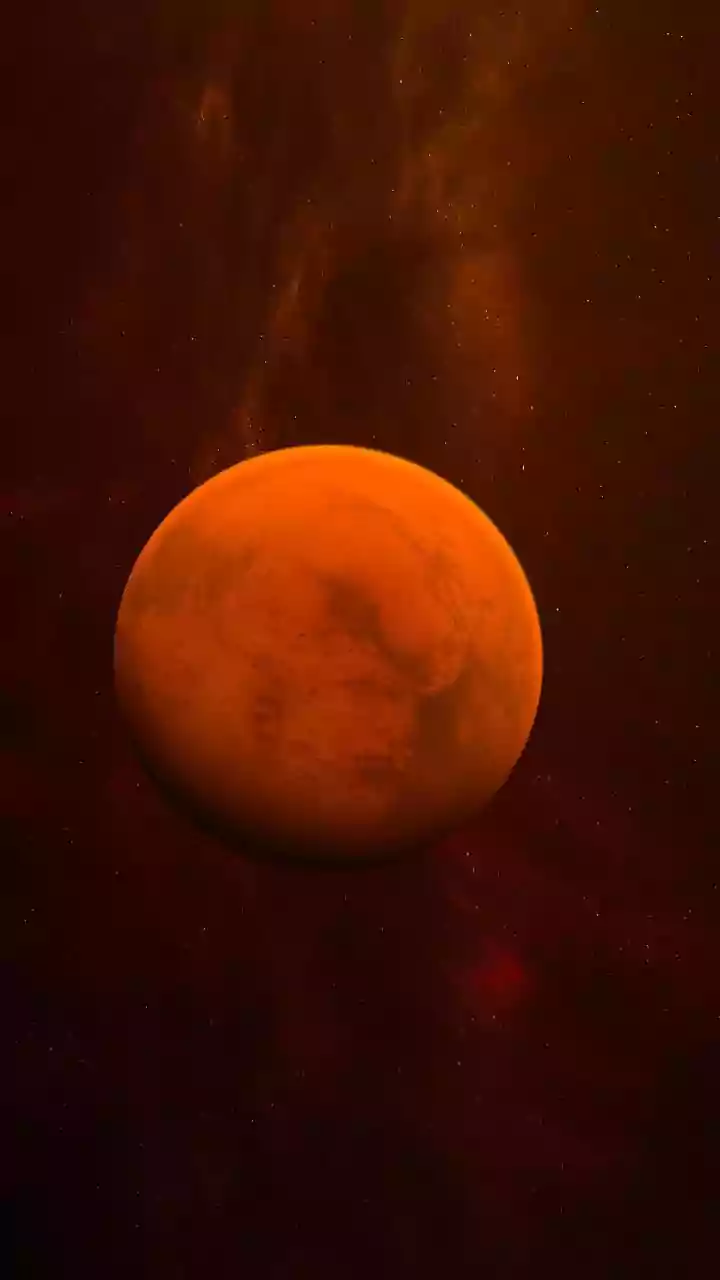
pebbles, growing larger over time. The other involves violent collisions between 'planetesimals'—solid, kilometre-sized bodies formed from cosmic dust. For decades, scientists wondered which process was dominant. New research from the University of Copenhagen suggests the answer is a hybrid of both, but with a startling twist: the recipe was completely different for each planet. While Earth appears to have formed primarily through pebble accretion, gaining about 75% of its mass this way, Mars did the opposite. The new models indicate that roughly three-quarters of the Red Planet's mass came from the collisional pile-up of planetesimals.
Cosmic Detective Work
How can scientists possibly know what happened 4.5 billion years ago? The clues are locked away inside the planets themselves. The research team focused on volatile elements like sodium, zinc, and potassium in the mantles of Earth and Mars. These elements have low melting points, so their relative abundance acts like a fingerprint, revealing the intensity of the formation process. By analysing the chemical composition of Martian meteorites—rocks blasted off Mars that later landed on Earth—and comparing them with Earth's own mantle, scientists can reconstruct the past. They used sophisticated statistical modeling to test which formation scenarios could produce the chemical signatures we see today. The results consistently showed that Mars's composition is best explained by a history dominated by collisions, while Earth’s required a gentler accumulation of pebbles.
A Tale of Different Upbringings
The finding that Earth and Mars formed so differently, despite being cosmic neighbours born from the same cloud of gas and dust, was a major surprise to the researchers. One might expect them to have similar formation histories. This discovery suggests that a planet's final form is highly dependent on its local environment in the early solar system. For instance, the gravitational pull of nearby protoplanets might have influenced how efficiently Mars could capture drifting pebbles, leaving collisions with larger planetesimals as its main path to growth. This model also aligns with other evidence suggesting Mars formed very quickly, effectively becoming a 'stranded' planetary embryo, while Earth continued to grow and evolve through major impacts, including the one believed to have formed our Moon.
Why This Changes Everything
This new understanding of Mars’s birth has profound implications. It refines our grand theory of how all planets form, both in our solar system and beyond. By showing that two neighbouring rocky planets can follow fundamentally different growth paths, it gives astronomers a more complex and nuanced model to work with when studying distant exoplanets. It helps explain why Mars is the way it is: a smaller, geologically distinct world that cooled down much faster than Earth. Its formation, dominated by violent impacts of already-formed, volatile-depleted rocks, helps account for its thin atmosphere and different chemical makeup. This research doesn't just solve a long-standing debate; it opens up new avenues for understanding what makes a planet habitable and how many different ways a world can be born.