






A Starry, Sweet-Scented Arrival
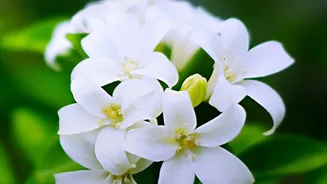
Known botanically as Jasminum multipartitum, African Jasmine, or Starry Wild Jasmine, is a delightful evergreen that can be grown as a scrambling shrub or a climber. Its main attraction is its stunning flowers. Emerging from pink-tinted buds, the blossoms
open into brilliant white, star-shaped flowers with slender, delicate petals. These blooms are not just a visual treat; they release a sweet, captivating fragrance. The aroma is often described as rich but delicate, becoming more intense in the evening and at night, filling the air with a fresh, floral perfume. This characteristic makes it a perfect plant for patios, balconies, or near a window where its scent can be enjoyed.
Not Your Everyday Mogra
While it shares the beloved jasmine name, African Jasmine has its own distinct personality compared to the popular varieties in India like Mogra (Jasminum sambac) or Chameli (Jasminum officinale). The most noticeable difference is the flower's shape; the slender, spidery petals of African Jasmine give it a 'starry' look, distinct from the rounded, fuller petals of Mogra. The fragrance profile also differs. While many jasmines have a powerfully sweet and sometimes musky scent, African Jasmine’s aroma is often considered fresher and more delicately sweet. It's a versatile grower, happy as a shrub or when trained on a trellis, whereas some other jasmines are more distinctly either a bush or a vigorous vine.
More Than Just a Pretty Flower
Beyond its ornamental value, African Jasmine holds a place in traditional practices. In its native Southern Africa, it has been used to make fragrant teas and to scent bathwater and potpourri. While not as extensively documented for medicinal use as other jasmine species, the aroma is widely associated with relaxation and stress relief. The plant is also ecologically significant, attracting pollinators like moths and butterflies. Its shiny black berries are eaten by birds, making it a wonderful addition to a wildlife-friendly garden. Even when not in bloom, its glossy, dark green foliage provides an attractive year-round presence.
How to Grow African Jasmine in India
Growing African Jasmine in Indian conditions is quite achievable, as it is well-suited to tropical and subtropical climates. It is fairly heat tolerant and can handle a range of soils, provided they are well-draining. For best results, use a mix of garden soil, compost, and a little sand to prevent waterlogging. This plant thrives in partial shade or a spot that receives morning sun, which is ideal for hot Indian summers. While it can tolerate full sun, some protection during the hottest part of the day will keep it happy. Water it regularly, allowing the top layer of soil to dry out between waterings. Avoid overwatering, as this is a common issue. A balanced fertiliser in the spring can encourage healthy growth and abundant flowers. Pruning is best done after the flowering season to maintain its shape.