







The Breath as Your Anchor
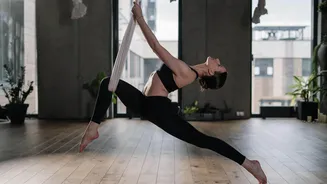
In any yoga practice, the breath, or pranayama, is the vital life force that connects mind and body. In aerial yoga, this connection becomes even more critical. When you're inverted, wrapped in fabric, or balancing on an unstable surface, your breath becomes an anchor.
It provides a steady rhythm that you can return to when a pose feels challenging or fear begins to creep in. Unlike practicing on a solid mat, the aerial hammock demands constant presence and focus to maintain balance and control. By consciously guiding your breath, you create an internal metronome that helps you move with intention and awareness, transforming a potentially disorienting experience into a mindful, moving meditation.
Calming Your Nervous System
Hanging upside down can be exhilarating, but it can also trigger the body's 'fight or flight' response. A racing heart and shallow breathing are signs that your sympathetic nervous system is on high alert. This is where controlled breathing becomes a powerful tool. Slow, deep, and deliberate breathing, such as diaphragmatic breathing, activates the parasympathetic nervous system—the body's 'rest and digest' mode. This simple act helps lower stress hormones like cortisol, reduces your heart rate, and promotes a sense of calm and mental clarity. When you find yourself getting anxious before attempting a new inversion, focusing on slow, rhythmic breathing can soothe your nerves and build the confidence needed to proceed safely.
A Key Technique: Ujjayi Breath
One of the most effective techniques for aerial yoga is Ujjayi breath, often called 'Victorious Breath' or 'Ocean Breath'. This technique involves inhaling and exhaling through the nose while gently constricting the muscles in the back of the throat, creating a soft, audible sound like ocean waves. The sound itself provides a focal point, helping to quiet mental chatter and draw your awareness inward. Physiologically, Ujjayi breath builds internal heat, warming the muscles and making them more pliable for deep stretches. This controlled, steady flow of breath oxygenates the muscles, supporting endurance and stability in physically demanding poses.
Enhancing Stability and Core Engagement
Focus in aerial yoga isn't just mental; it's deeply physical. Your ability to hold a pose with grace depends on core stability, which is directly linked to your breath. When you exhale with intention, you naturally engage your deep core muscles. This engagement provides a solid foundation, even when the hammock is moving. Think of your breath as the command center for your core. A strong, controlled exhalation helps you find and maintain your center of gravity, which is essential for balance while suspended. Proper breathing encourages better physical alignment and posture, helping you create space in the body and lengthen the spine during poses.
Putting It into Practice
To integrate controlled breathing into your aerial practice, start simply. Before you even get into the hammock, take a few moments to sit and focus on your natural breath. As you begin to move, try to link each movement to an inhale or an exhale. For example, inhale as you lengthen into a pose and exhale as you deepen a stretch or transition to a new position. When holding a challenging pose, especially an inversion, return your focus to the sound and rhythm of your Ujjayi breath. This practice not only improves your physical performance but also transforms your time in the air into a more restorative and focused experience.