








Decoding the Prediction
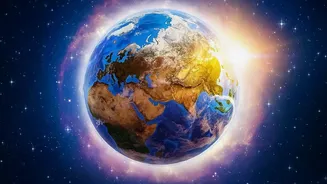
Recent reports from the World Meteorological Organization (WMO) state there is a high likelihood—around 80%—that the planet's annual average temperature will temporarily exceed 1.5°C above pre-industrial levels in at least one of the next five years.
This doesn't mean the world has permanently failed the Paris Agreement's long-term goal. That agreement refers to a sustained, multi-decade average warming, not a single year's breach. The prediction is a stark warning that we are getting ever closer to the long-term limit. The chance of such a temporary breach has risen dramatically; in 2015, the probability was near zero. This sharp increase signals an accelerating trend, fueled by record greenhouse gas concentrations and warming oceans.
A Temporary Spike vs. A Permanent Fever
It's crucial to understand the difference between a temporary 'overshoot' and permanently living in a world that is 1.5°C warmer. Think of it like a person's fever: a brief spike to a high temperature for a day is a serious symptom, but it's different from a chronic, long-term fever that indicates a deeper illness. Scientists define the permanent breach of the Paris target as when the 20-year average temperature crosses the 1.5°C mark. A single year, or even several months, exceeding this limit is a dire indicator of the trajectory we are on, but it doesn't trigger the same irreversible, cascading consequences that sustained warming would. However, these temporary spikes are becoming more frequent and are a clear sign that the Earth’s climate system is increasingly out of balance.
What 1.5°C Feels Like in India
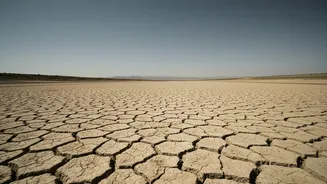
A global average temperature rise isn't felt uniformly. For India, the impacts are more severe and immediate. Even approaching 1.5°C of warming means more frequent and intense heatwaves, like the ones that have scorched northern India in recent years, affecting human health and productivity. The Himalayan states are projected to warm at a much faster rate than the national average, with Ladakh potentially seeing a rise of over 2.2°C. This accelerates glacier melt, threatening water security for millions downstream. Monsoon patterns are also becoming more erratic, with projections showing a potential increase in overall rainfall but with extreme fluctuations—leading to severe floods in some areas and droughts in others. These changes pose a direct threat to India's food security, with winter-sown crops like wheat being particularly vulnerable to temperature spikes.
From Probability to Preparation
Debating whether the 1.5°C line will be crossed in 2026 or 2027 misses the point. The high probability of a temporary breach is a fire alarm for the planet. It signals the urgent need to accelerate action rather than wait for the certainty of a permanent failure. Every fraction of a degree of warming that is avoided matters, as it reduces the risks of triggering irreversible 'tipping points,' like the collapse of major ice sheets or the dieback of the Amazon rainforest. For India, this means doubling down on its renewable energy targets, investing in climate-resilient infrastructure, improving water management systems, and strengthening early warning systems for extreme weather events. The scientific 'probability' is a clear call for practical 'preparation' on a national scale.