





Meet PRIMA: NASA's Next Great Observer
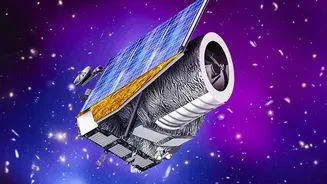
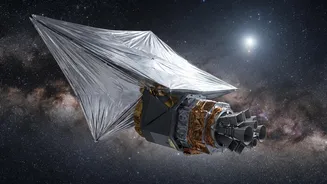
PRIMA, which stands for the Probe far-Infrared Mission for Astrophysics, is a cutting-edge space telescope designed to see the universe in a way that other famous observatories cannot. While the James Webb Space Telescope (JWST) excels at near- and mid-infrared
light, PRIMA will specialize in the far-infrared spectrum. This allows it to peer through cosmic dust and observe the cold, faint signatures of the early universe. Its primary goals are ambitious: to understand how planets form, how galaxies and their supermassive black holes grow, and to trace the origins of water and other essential elements across cosmic history. With a 1.8-meter mirror, PRIMA will fill a critical observational gap left since the retirement of missions like the Herschel Space Observatory, providing a clearer picture of everything from the birth of stars to the formation of our own solar system.
The Significance of Phase B
When NASA moves a project into Phase B, it is a major vote of confidence. The agency's project lifecycle is a meticulous process, and Phase B marks the transition from initial concepts to concrete engineering. During this stage, which will last about two years, engineers will finalize the telescope's preliminary design, mature the required technology, and establish contracts for key hardware components. Think of it as moving from a rough architectural sketch to a detailed blueprint. This phase is critical for ensuring the mission can be developed on schedule and within its budget. If PRIMA successfully passes all its reviews at the end of Phase B, it will proceed to Phase C: the actual fabrication and manufacturing of the spacecraft ahead of its targeted 2033 launch.
The $1.2 Billion Commitment
The $1.2 billion cost cap for PRIMA is a significant figure that places the mission in a new and important category. This budget, which excludes the cost of the launch, establishes PRIMA as the first of NASA's 'Probe Explorer' missions. This new class was created to bridge the gap between smaller, more focused missions and enormous, decade-spanning flagship projects like the $10 billion James Webb Space Telescope. Probe Explorers are designed to tackle high-priority science questions identified by the scientific community without overwhelming NASA's entire astrophysics budget. This funding structure provides stability and predictability for the university labs and industry partners who develop the specialized technology, ensuring a steady cadence of major scientific endeavors.
Unlocking the Secrets of Planet Formation
One of PRIMA's most exciting objectives is to shed light on how planets are born. Scientists believe far-infrared light is the key to understanding this process. According to Meredith MacGregor, a Johns Hopkins University professor involved in the mission, PRIMA will be able to quantify the role water plays in planet formation and measure the raw materials available in the disks around young stars where planets form. These are questions that even the powerful JWST cannot fully answer because the necessary chemical signatures are only visible in the far-infrared wavelengths PRIMA is designed to see. By studying these cosmic nurseries, PRIMA will provide invaluable data on the environments that create planets, helping us understand the origins of worlds both within and beyond our solar system.