




The Mountain's Ticking Time Bombs
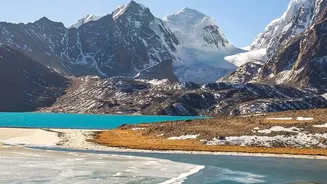
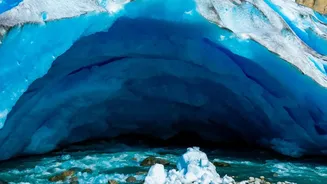
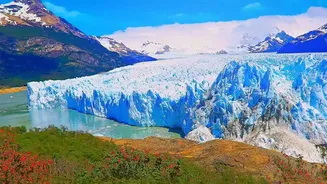
Imagine a lake high in the mountains, fed by melting glaciers. These are not the serene, picturesque lakes you might picture. Many are held back only by loose walls of rock and debris left behind by retreating glaciers. These natural dams, known as moraines,
can be incredibly unstable. As global temperatures rise, glaciers are melting at an accelerated rate, pouring vast amounts of water into these lakes. Some lakes have grown dramatically in just a few decades, increasing the pressure on their fragile natural barriers and turning them into ticking time bombs.
What Exactly Is a GLOF?
The danger these lakes pose has a name: Glacial Lake Outburst Flood, or GLOF. A GLOF is the sudden and catastrophic failure of the dam containing a glacial lake. This can be triggered by a number of things: an avalanche or landslide crashing into the lake, creating a massive wave that overtops the dam; an earthquake shaking the ground; or simply the immense pressure of the water finally breaking through a weak point. The result is not a gentle overflow. It's a violent, sudden release of millions of cubic metres of water, ice, and debris that rushes down mountain valleys at incredible speeds, destroying everything in its path. These events can have peak flows many times greater than a normal river flood.
Nepal: A High-Risk Hotspot
Nepal's geography makes it particularly vulnerable. The country is home to thousands of glaciers and a growing number of potentially dangerous glacial lakes. Its steep, geologically active terrain means that landslides and avalanches are common triggers for GLOFs. In recent years, Nepal has experienced devastating flood events linked to glacial activity. A catastrophic event in August 2026 in the Langtang region, triggered by a massive ice-rock avalanche near the Chinese border, resulted in a debris flow that travelled nearly 100 kilometres downstream, causing widespread destruction. This highlighted the terrifying speed and scale of such disasters, leaving communities with little to no time to react.
The Human Cost and Infrastructure Threat
When a GLOF occurs, the consequences are devastating. The wall of water and debris can obliterate entire villages, farmlands, and critical infrastructure like roads, bridges, and hydropower plants. Hydropower is a cornerstone of Nepal's economy, but many projects are built along river valleys directly in the path of potential GLOFs, creating a massive economic and safety risk. For communities living downstream, the threat is existential. A single event can wash away homes, livelihoods, and tragically, claim hundreds of lives, as seen in the 2026 disaster where rescue efforts were severely hampered by the very destruction the flood caused.
A Shared Threat for the Region
The problem doesn't stop at Nepal's borders. Many of the major rivers that flow into India, such as the Kosi and Gandaki systems that are lifelines for states like Bihar and Uttar Pradesh, originate in the high Himalayas of Nepal. A major GLOF or glacier collapse event upstream in Nepal can trigger catastrophic transboundary floods, sending surges of water across the border with little warning. The 2026 Trishuli River flood demonstrated this, with bodies and debris being recovered far downstream, even reaching into India. This makes glacier instability in Nepal a direct security concern for downstream Indian communities, demanding closer cross-border cooperation on monitoring and disaster preparedness.
The Race Against Time
Tackling this threat is a monumental challenge. Scientists and governments are working to identify and monitor the most dangerous glacial lakes using satellite imagery and field surveys. In some cases, mitigation projects have been undertaken to lower the water levels in high-risk lakes, for instance by siphoning water out through pipes. Early warning systems, combining sensors and community-based communication networks, are being developed to give people downstream precious minutes to evacuate. However, the sheer number of lakes, their remote locations, and the unpredictable nature of the triggers make comprehensive monitoring extremely difficult and expensive. Following the 2026 disaster, India has increased its own monitoring efforts and approved funding for GLOF mitigation projects in its Himalayan states.