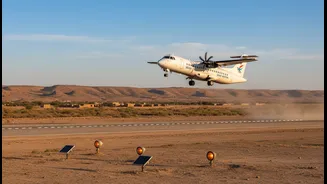










The Promise of Connecting India
Launched in 2016, the Ude Desh ka Aam Nagrik (UDAN) scheme was a revolutionary idea: make air travel accessible to the common citizen. The plan involved connecting unserved and underserved airports in Tier-2 and Tier-3 cities by providing subsidies to airlines.
In return, airlines would cap fares on a portion of seats, with the popular benchmark being around ₹2,500 for a one-hour flight. The government invested heavily, spending thousands of crores on reviving old airstrips and providing Viability Gap Funding (VGF) to airlines to cover potential losses on these commercially challenging routes. Since its inception, the scheme has operationalised hundreds of routes, connected dozens of airports, and allowed over 1.6 crore passengers to fly.
A Reality Check: Disconnected Routes
Despite the initial success, the scheme is facing significant sustainability issues. Recent data from July 2026 reveals a stark reality: of the 669 routes made operational since 2017, only 336 remain active. This means nearly half of the routes launched with much fanfare are no longer served, leaving many of the newly developed regional airports with reduced or no flights. Examples include routes connecting airports like Bidar and Kalaburagi in Karnataka, where services were discontinued after the initial three-year subsidy period ended. The reasons for these closures are complex, ranging from low passenger demand to the fragile financial health of smaller regional airlines that often operate on thin margins.
Why Are Flights Being Grounded?
The primary challenge is commercial viability. The original UDAN model provided subsidies for three years, assuming that routes would become self-sustaining by then. However, on many routes, passenger demand never grew strong enough to make them profitable without government support. Once the subsidies ended, airlines withdrew services. Smaller regional airlines, the backbone of the scheme, have struggled with high operational costs, maintenance issues, and difficulties in acquiring aircraft. Furthermore, industry experts point to poor network design; a lack of connectivity to major metro hubs like Delhi and Mumbai makes regional routes less attractive for passengers. Competition from improved rail networks, like the Vande Bharat Express, also presents a challenge on shorter routes.
Finding the Silver Linings and Low Fares
It's not all bad news for travellers. More than 300 UDAN routes are still operational, and many continue to offer excellent value. The key is to know where to look. Major carriers like IndiGo and SpiceJet have a better track record of maintaining their UDAN routes. Successful routes often connect to religious or tourist destinations, such as Deoghar, Kishangarh (Ajmer), and Pakyong (Sikkim), which have seen a significant boost in accessibility. When booking, travellers should check airline websites and online travel portals directly. UDAN-capped fares are often displayed alongside regular fares without special branding, so it pays to compare. Flexibility with travel dates can also help in snagging these subsidised seats.
The Next Phase: Viksit UDAN
The government has acknowledged the scheme's shortcomings and recently launched a revamped version called 'Viksit UDAN'. This new phase, backed by a significant financial outlay of nearly ₹29,000 crore over ten years, aims to address the core issues. Key changes include extending the subsidy period for airlines from three to five years to give routes more time to become viable. There is also a renewed focus on developing robust infrastructure, including 100 new aerodromes and 200 modern helipads, to improve last-mile connectivity. This modified approach hopes to create a more sustainable ecosystem for regional aviation in the long run.