






A New Eye in a Unique Orbit
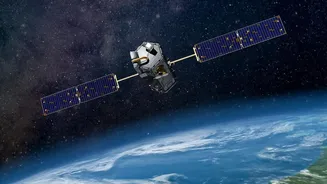
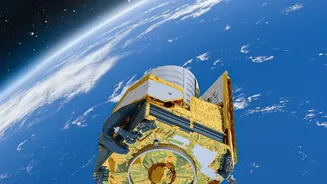
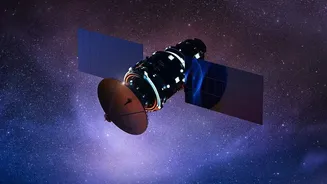
On September 4, 2026, the Indian Space Research Organisation (ISRO) launched the EOS-05 satellite aboard a GSLV-F17 rocket from the Satish Dhawan Space Centre in Sriharikota. What makes this mission particularly special is its destination: a geosynchronous
orbit. Unlike most Earth-imaging satellites that circle the globe every 90-100 minutes, a satellite in geosynchronous orbit moves in sync with the Earth's rotation. This allows EOS-05 to remain over the Indian subcontinent continuously, providing a persistent, real-time watch over a vast area. This launch was a milestone, making EOS-05 India's first imaging satellite to operate from this high-altitude perch, roughly 36,000 kilometers up. The mission was also a significant comeback for ISRO, marking a major success after a few setbacks in previous missions.
The Mission's Ambitious Goals
EOS-05 is designed as a state-of-the-art observation tool. Its primary job is to capture high-resolution images of the Earth's surface using a variety of sensors. According to ISRO, the satellite can image a selected field every five minutes and the entire Indian landmass every half hour. This capability is a game-changer for several key sectors. For disaster management, it means being able to track the rapid development of cyclones, floods, and landslides in near real-time, enabling faster and more effective responses. For agriculture, the satellite will provide crucial data on crop health, soil moisture, and pest detection, helping to improve yields and manage resources more efficiently. The data collected will also be invaluable for monitoring environmental changes, from forest cover to water quality in our rivers and oceans.
The Core Story: A Strategic Asset
Beyond its civilian applications, the core story of EOS-05 lies in its strategic importance. The ability to maintain a constant vigil over a specific region provides a significant boost to India's national security and surveillance capabilities. Officials have noted that the satellite will provide vital strategic data. This persistent monitoring is crucial for keeping an eye on border areas and maritime interests, offering a level of intelligence gathering that was previously much more challenging. Satellites in lower orbits provide snapshots in time as they pass over a location, but EOS-05's geosynchronous position offers a continuous video feed, in essence. This successful deployment is seen as a direct enhancement of India's capacity to monitor its neighborhood and respond to security challenges with better information.
A Technical Triumph
The successful launch was not just about the satellite, but also about the rocket that carried it. The GSLV-F17 rocket successfully transported the 2,367 kg EOS-05, making it the heaviest satellite ever placed into this type of orbit by a GSLV. The launch vehicle placed the satellite into a sub-geosynchronous transfer orbit, a temporary elliptical path, about 18 minutes after liftoff. From there, ISRO engineers executed a series of complex orbit-raising manoeuvres over the next few days, using the satellite's onboard engine to push it into its final, near-circular geosynchronous orbit. By September 8, ISRO confirmed that the satellite had successfully reached its intended orbit and was in good health, a testament to the precision and expertise of the mission control team.