



What is a Floating Solar Scheme?
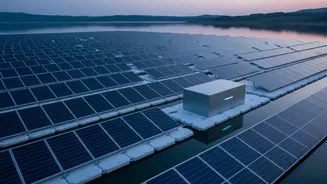
A floating solar scheme, often called 'floatovoltaics,' involves installing solar panels on platforms that float on water bodies like reservoirs, lakes, and ponds. For a densely populated country like India, this approach is a game-changer. It solves
the major challenge of land scarcity, freeing up valuable land for agriculture, industry, or housing. Instead of competing for space, these projects make dual use of existing resources. Furthermore, placing panels on water has added benefits. The water has a natural cooling effect, which can increase the efficiency and energy output of the solar panels compared to land-based systems. They also reduce water evaporation by shading the surface—a critical advantage in water-stressed regions—and can improve water quality by limiting the growth of harmful algae.
The Sunset Problem: Solar's Big Challenge
The primary limitation of solar power is its intermittency. Power generation drops on cloudy days and stops entirely at night. However, electricity demand often peaks in the evening when people return home and turn on lights and appliances. This mismatch between when solar power is produced and when it's most needed creates a major challenge for grid operators, who must ensure a stable and reliable supply of electricity 24/7. Traditionally, this gap has been filled by firing up power plants that run on fossil fuels, which can be expensive and polluting. For India to meet its ambitious renewable energy goals, including achieving 500 GW of non-fossil fuel capacity by 2030, it needs a way to make clean energy available on demand, not just when nature cooperates.
Enter Battery Storage: The Missing Piece
This is where Battery Energy Storage Systems (BESS) come in. Think of a BESS as a giant, rechargeable power bank for the electricity grid. During the day, when the floating solar panels are generating a surplus of electricity, that excess power is used to charge the batteries. When the sun sets or during periods of high demand, the stored energy is discharged back into the grid, ensuring a continuous and stable power supply. This ability to store and release energy on command transforms intermittent renewable sources like solar into reliable, dispatchable power assets. It helps balance supply and demand, prevents blackouts, and makes the entire grid more resilient and efficient.
A Powerful Combination for India
By pairing floating solar farms with battery storage, India is creating a powerful, synergistic solution. These hybrid projects can provide clean energy around the clock, directly addressing the intermittency issue. This is crucial for stabilising the grid as the share of renewables in the country's energy mix grows. Recognizing this potential, the Indian government recently approved the Pradhan Mantri Surya Sarovar Yojana (PM-SSY). This scheme aims to deploy 5 GW of floating solar capacity integrated with a minimum of two hours of battery storage. This initiative will dramatically scale up India's current floating solar capacity from about 700 MW and tap into the country's estimated 102 GW potential. Projects in places like Rajnandgaon in Chhattisgarh and on the Getalsud Dam in Jharkhand are already showcasing the viability of this integrated approach.
More Than Just Power
The push for floating solar with storage is a key part of India's larger strategy to achieve its climate targets, including net-zero emissions by 2070. By making better use of reservoirs and industrial ponds, the country can accelerate its renewable energy transition without intensifying land-use conflicts. The PM-SSY scheme is also designed to boost domestic manufacturing across the entire value chain, from the floating platforms themselves to the PV cells and battery systems. The government estimates the initiative will create thousands of jobs and reduce carbon dioxide emissions by around 10 million tonnes annually. It represents a strategic move towards energy security, environmental sustainability, and economic growth, all powered by the sun, even after it sets.