





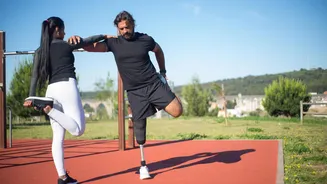
1. The Plank: Your Foundation for Stability
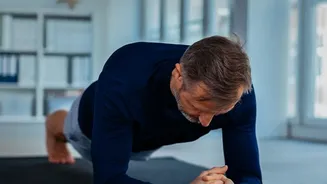
The plank is a fundamental core exercise for a reason. It’s an isometric hold that teaches your body to brace and stabilize your entire trunk, from your shoulders to your hips. This move engages the deep transverse abdominis muscles, which act like a natural
corset for your spine. Unlike crunches, which focus on flexion, the plank builds endurance and stability that translates directly into better posture and a reduced risk of back pain. How to do it: Start by lying face down. Place your forearms on the floor with your elbows directly under your shoulders and your hands clasped. Extend your legs straight behind you, resting on the balls of your feet. Lift your hips so your body forms a straight line from your head to your heels. Engage your core by pulling your navel towards your spine. Avoid letting your hips sag or rise too high. Hold this position for 20-30 seconds to start, focusing on steady breathing. If a full plank is too challenging, you can modify it by dropping your knees to the floor.
2. The Glute Bridge: Powering Your Posterior Chain
A balanced core isn't just about the front of your body. The glute bridge targets the posterior chain—your glutes and hamstrings—which are crucial partners to your lower back and abs for overall stability. Strengthening your glutes helps take the pressure off your lumbar spine during daily activities like lifting and bending. How to do it: Lie on your back with your knees bent, feet flat on the floor about hip-width apart, and your arms resting by your sides with palms down. Engage your core and squeeze your glutes to lift your hips off the floor until your body forms a straight line from your shoulders to your knees. Pause at the top for a second, making sure you are squeezing your glutes, not arching your back. Slowly lower your hips back to the starting position with control. Aim for 10-15 repetitions.
3. The Bird-Dog: A Test of Balance and Control
The bird-dog is an excellent exercise for improving stability across the torso while moving your limbs, a skill essential for coordination. It challenges your body to resist rotation and maintain a neutral spine, engaging your abs, lower back, and glutes simultaneously. This move is fantastic for building functional core strength without putting stress on your back. How to do it: Start on all fours in a tabletop position, with your hands directly under your shoulders and your knees directly under your hips. Keep your back flat and your neck in line with your spine. Engage your core, then slowly extend your right arm straight forward while simultaneously extending your left leg straight back. Keep your hips level and avoid arching your back. Hold for a moment before returning to the starting position with control. Repeat on the other side, extending your left arm and right leg. That’s one rep. Aim for 8-12 reps per side.
4. The Dead Bug: Coordinating and Stabilizing
Don't let the name fool you; the dead bug is a powerhouse for deep core stabilization. It teaches your body to keep your torso and pelvis stable while your arms and legs are in motion, which is key for preventing lower back strain. The slow, controlled movement makes it incredibly effective for beginners to build a strong mind-muscle connection with their abs. How to do it: Lie on your back with your arms extended toward the ceiling, directly above your shoulders. Bend your knees to a 90-degree angle so your shins are parallel to the floor (tabletop position). Press your lower back gently into the floor. Inhale and slowly lower your right arm and left leg toward the floor, moving from the shoulder and hip. Go as low as you can without letting your lower back arch off the floor. Exhale as you return to the starting position. Repeat with the opposite arm and leg. Aim for 10-12 total repetitions, alternating sides.
5. Standing Bicycle Crunches: Rotational Strength, No Mat Needed
While traditional bicycle crunches are great, the standing version is a more accessible starting point that reduces neck strain and still effectively targets your obliques (the muscles on the sides of your abs). This move introduces rotational strength, a key component of a balanced core that is used whenever you twist your torso. How to do it: Stand with your feet shoulder-width apart and place your hands lightly behind your head, keeping your elbows wide. Engage your core and lift your right knee up toward your chest. As you lift your knee, rotate your torso to bring your left elbow toward your right knee. Focus on the twist coming from your waist, not from pulling on your neck. Return to the starting position and repeat on the other side, bringing your left knee to your right elbow. Continue alternating in a smooth, controlled rhythm for 30-45 seconds.