







A Planet's Fever Chart
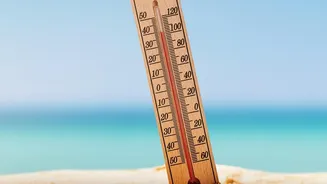
On August 22, 2026, the daily global average sea surface temperature reached 21.1 degrees Celsius. While the number may seem small, it broke the previous record set only in March 2024. This is significant because even tiny fractions of a degree represent
an enormous amount of trapped heat across the vastness of the world's oceans. What makes this record particularly unusual is its timing. Global sea temperatures typically peak in March or April, following summer in the ocean-heavy Southern Hemisphere. Setting a new high in August underscores a persistent and accelerating warming trend that has scientists deeply concerned.
Why the Ocean's Temperature Matters
Oceans are the planet's great climate regulators, absorbing over 90% of the excess heat generated by human activities. They act like a massive sponge, soaking up heat and carbon dioxide, which shields us from even more rapid atmospheric warming. But this service comes at a cost. Warmer water expands, a process known as thermal expansion, which is a major driver of sea-level rise, threatening coastal communities worldwide, including millions along India's vast coastline. Furthermore, a warmer ocean transfers more heat and moisture into the atmosphere. This additional energy acts like fuel for weather systems, making storms more intense and rainfall more extreme.
The Indian Connection: Unpredictable Monsoons and Fiercer Cyclones
For India, the implications of this global record are local and profound. The Indian Ocean is warming faster than any other tropical ocean basin. This anomalous heat directly impacts the lifeblood of the subcontinent: the monsoon. Studies show that marine heatwaves in the Indian Ocean can lead to reduced rainfall over central India while increasing it over the southern peninsula, disrupting agricultural cycles and water security for millions. At the same time, the warmer waters of the Arabian Sea and the Bay of Bengal provide more fuel for cyclones. This allows them to intensify rapidly and maintain their strength, posing a greater threat to coastal populations and infrastructure.
An Ecosystem on the Brink
The crisis extends beneath the waves. Marine heatwaves are becoming more frequent and intense, leading to catastrophic coral bleaching events. India has already witnessed this devastation in the Gulf of Mannar, the Andaman and Nicobar Islands, and Lakshadweep, where vibrant reefs that support tourism and protect coastlines have been damaged. This heat also puts immense stress on marine life, from the smallest phytoplankton to large fish stocks. As waters warm, fish may migrate to cooler areas, disrupting the livelihoods of the millions of Indians who depend on fishing. The increasing number of marine heatwave days—which have more than tripled since the 1990s—is pushing these vital ecosystems to their limits.
A Long-Term Trend, Not a One-Off Event
This record is not an isolated event but part of a clear, decades-long warming trend driven by human-induced climate change. This year, the baseline warming is amplified by a strong developing El Niño, a natural climate pattern that warms the Pacific and affects weather globally. However, scientists are clear that El Niño is simply adding heat on top of a system that is already dangerously overheated. The last several years have been the hottest on record for the oceans, and this latest milestone confirms that we are in uncharted territory. The consistent breaking of records indicates a fundamental and worrying change in our planet's climate system.