


The 'Eyes and Brains' of Modern Cars
Before diving into the chaos, let's clarify what we mean by 'vehicle-detection systems'. These are the technologies underpinning Advanced Driver-Assistance Systems (ADAS), which are becoming increasingly common in new cars. Think of features like Automatic
Emergency Braking (AEB), which can prevent a rear-end collision, or Lane-Keeping Assist that nudges you back into your lane. These systems rely on a suite of sensors — cameras for visual data, radar for detecting objects and their speed, and sometimes LiDAR, which uses lasers to create a detailed 3D map of the surroundings. An onboard computer processes this data in real-time to make split-second decisions. In essence, they act as a car's superhuman eyes and reflexes, designed to assist the driver and prevent accidents caused by human error.
A World of Difference
Most of these systems are developed and trained in highly structured environments like the highways of California or Europe. There, roads have clear lane markings, traffic flow is generally predictable, and drivers are expected to follow a common set of rules. The AI models are trained on vast datasets from these regions, teaching them to expect orderly conduct. This works well until the system encounters a reality that violates its core assumptions. Indian roads are that reality. Here, the neatly defined rules that an AI is trained on are often treated as mere suggestions. The result is a system designed for predictable order being confronted with constant, unpredictable chaos, leading to false warnings or system disengagements.
The Edge Cases That Define Indian Roads
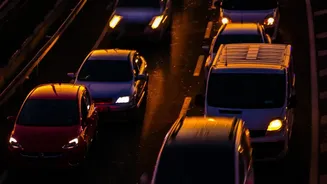
An 'edge case' in technology is a rare problem or situation that occurs only at extreme operating parameters. On Indian roads, these extremes are the norm. The first major challenge is the sheer heterogeneity of traffic. An autonomous system must not only distinguish between cars, trucks, and buses but also auto-rickshaws, overloaded motorcycles weaving through gaps, hand-pulled carts, cyclists, and jaywalking pedestrians. Compounding this is the unpredictable behaviour of every actor on the road, including animals like cows and stray dogs that can appear suddenly. Another significant hurdle is the infrastructure itself. Faded or non-existent lane markings, potholes, and inconsistent road signs make it incredibly difficult for camera-based systems to navigate accurately. A system relying on clear white lines to find its lane is rendered almost useless in many urban and rural areas.
Why Western-Trained AI Gets Confused
An AI model is only as good as the data it's trained on. A model trained primarily on orderly Western traffic develops a rigid understanding of what's 'normal'. It expects cars to stay in their lanes and pedestrians to use crosswalks. When it encounters an Indian street, its predictive models fail. A motorcyclist squeezing between two cars isn't an anomaly; it's a standard manoeuvre. This forces the system to constantly recalculate and often leads to confusion. As one expert noted, ADAS systems need to be rigorously validated across varied weather and lighting conditions, from bright sunlight to heavy monsoons, which can interfere with sensor performance. Simply put, the data from Western markets is not sufficient proof for reliable performance in India.
India as the Ultimate Proving Ground
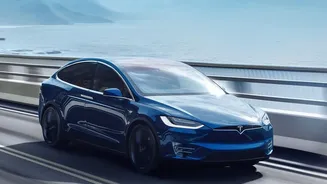
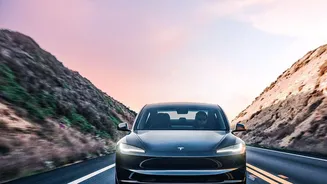
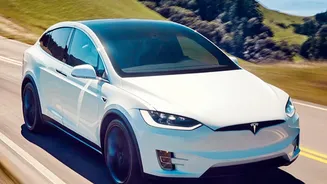
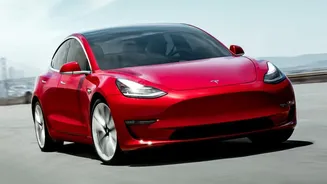
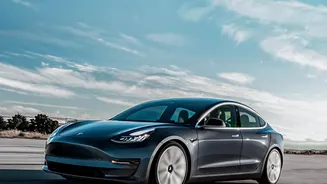
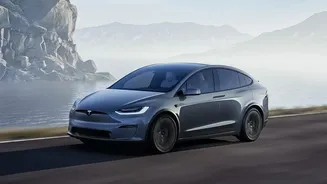
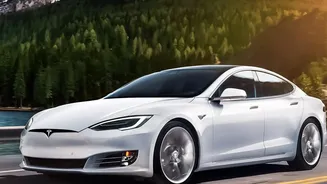
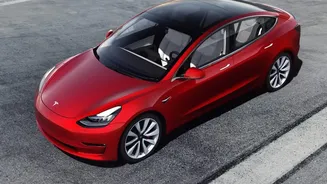
Instead of being a deterrent, this complexity is turning India into the ultimate testing ground for the future of autonomous technology. Global giants like Tesla have been seen testing their systems to gather crucial local data. Furthermore, a wave of Indian startups like Swaayatt Robots, Minus Zero, and Flux Auto are developing solutions from the ground up, specifically for these chaotic conditions. They are pioneering different approaches, some using reinforcement learning and game theory to model road interactions, while others focus on 'nature-inspired AI' that can operate with fewer sensors. Many are starting with controlled environments like mining sites or private campuses to prove their technology's reliability before moving to public roads. The consensus is clear: if a car can learn to drive itself safely in India, it can likely drive itself anywhere in the world.