





The Allure of Order
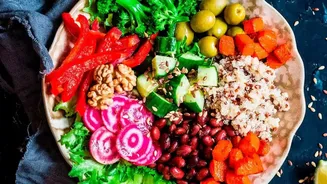
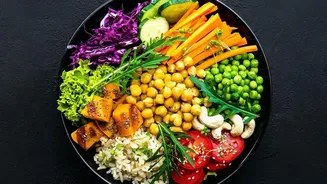
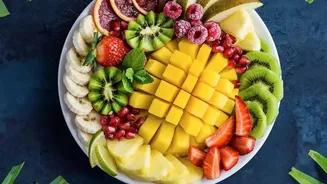
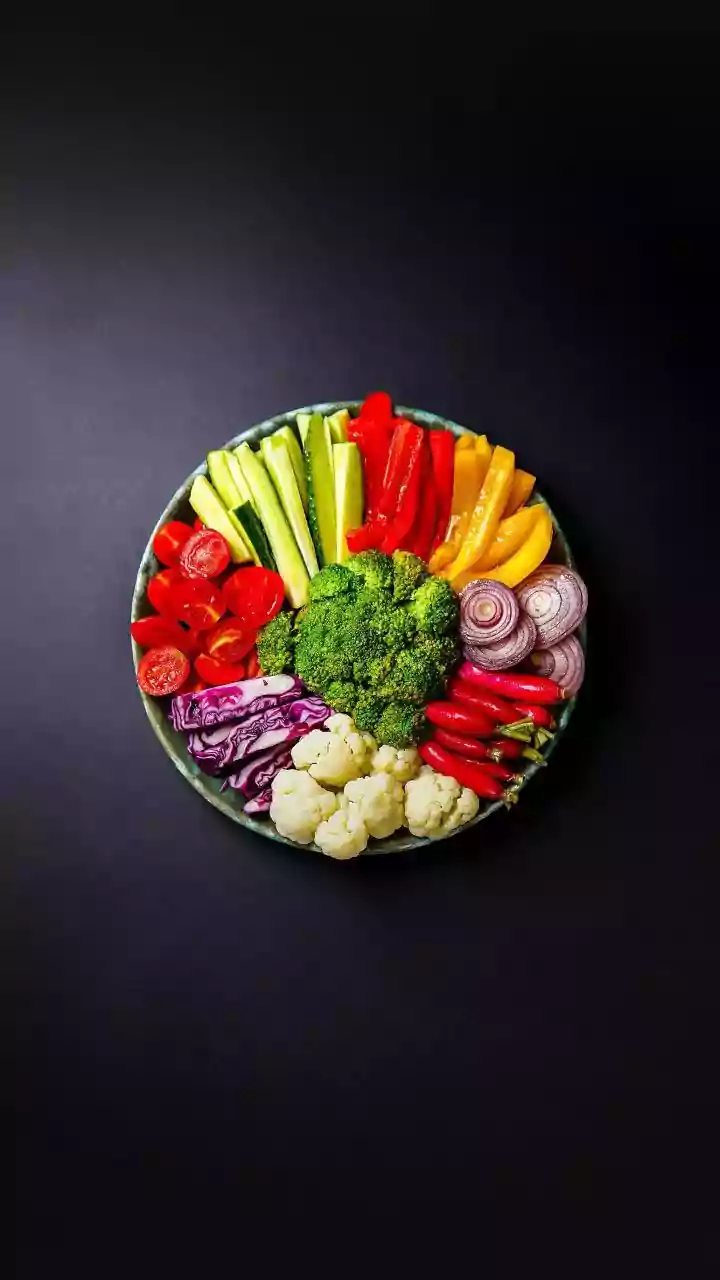
Imagine two plates of the same salad. One has its ingredients tossed together randomly, while the other has them arranged in a neat, structured pattern. Which one seems healthier? Studies consistently show that people perceive the organised meal as being
healthier and even lower in calories. This happens because our brains associate order and symmetry with intention and care. Researchers have found that classical aesthetics—principles like balance, symmetry, and order—are often found in nature. This connection may lead us to spontaneously view food that exhibits these traits as more natural, and therefore, healthier. This 'pretty is healthy' bias is so strong that people will judge an identical portion of food as being better for them simply because it looks neat and tidy.
The 'Halo Effect' on Your Plate
This phenomenon is an example of a cognitive bias known as the 'halo effect', where a positive impression in one area (like beautiful presentation) influences our feelings in another. When a dish looks professionally and artfully plated, we tend to believe it must be better in other ways too—tastier, higher quality, and, crucially, healthier. Some research has even found that people are willing to pay more for prettier food because they perceive it as healthier. This effect can be misleading. A dessert loaded with sugar and fat can be made to look incredibly elegant, and our brains might subconsciously give it a 'health halo' it does not deserve. One study even found that simply adding a few healthy-looking celery sticks next to a cheeseburger caused people to underestimate the meal's total calories.
Colour, Texture, and Placement
It is not just about neatness; other visual cues play a significant role. The colour of food and even the plate itself can change our perception. Brightly coloured plates can be bold, but a green plate might make a dessert less appealing. Studies show that warm colours like red and yellow can make food seem tastier. The texture of the food also sends signals. A biscuit with a rough, pronounced texture is often seen as healthier than a smooth one, which is perceived as tastier and more indulgent. Even the placement of food matters. One study found that food placed in the centre of a classically designed plate was perceived as tastier than food placed at the edge. Similarly, a recent Japanese study discovered that a dish was perceived as significantly healthier when sauces were served on the side rather than drizzled all over the main item.
Using Visuals to Your Advantage
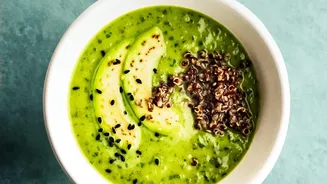
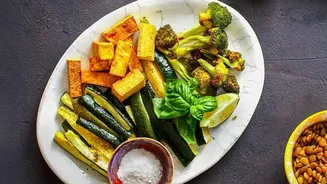
Understanding this psychology is not just for restaurants trying to make their food more appealing. You can use these principles in your own kitchen to cultivate better eating habits. If you want to encourage your family (or yourself) to eat more vegetables, take a few extra moments to arrange them beautifully. A colourful, well-arranged salad is far more enticing than a pile of greens. By making healthy food look more attractive, you can increase the positive emotions associated with it and make it a more desirable choice. Conversely, being aware of these biases can help you make more mindful decisions when eating out. Recognise that an artfully drizzled sauce or a perfectly stacked burger doesn't change the nutritional content. The meal might look like a work of art, but it is important to consider the actual ingredients rather than letting your eyes trick your brain.