





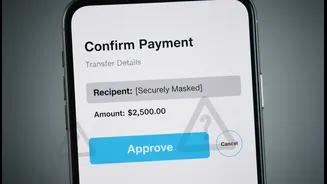


The Journey of Your Money
Think of a digital transfer—whether via NEFT, IMPS, or UPI—as sending a very precise digital letter. When you hit 'send', your bank (the remitting bank) wraps the money with an address label containing the recipient's account number, IFSC code, and name.
This package travels through a central system, like the National Payments Corporation of India (NPCI) for UPI, which acts as the post office. It reads the address and directs the package to the recipient's bank (the beneficiary bank). For the transfer to succeed, every detail on that address label must perfectly match what the receiving bank has on file. If even one character is off, the digital letter can't be delivered.
The Usual Suspects: Common Data Errors
The most common reason for a failed transfer is a mismatch in the beneficiary's details. An incorrect account number is a primary cause. Even a single wrong digit can send the instruction into a void. Similarly, an incorrect IFSC code can cause an instant rejection or delay. This is especially common after bank mergers, where old IFSC codes become obsolete. Another frequent issue is a name mismatch. While not all banks enforce a strict name check, many systems flag transactions where the entered name doesn't align with the account holder's registered name, leading to a block or failure. For UPI transactions, simply mistyping the UPI ID or VPA (Virtual Payment Address) will cause the payment to fail instantly.
Why Is My Money Debited if It Failed?
This is the part that causes the most anxiety. Your account gets debited because your bank has successfully done its part: it has sent the money out. The funds are now in a temporary holding pattern within the payment network while the system tries to deliver them to the beneficiary bank. When the beneficiary bank rejects the transaction due to a data mismatch or a technical issue on its end (like server downtime), it sends a failure message back. Your money is not lost in cyberspace; it's simply waiting for an instruction to return home. This entire process is logged with a Unique Transaction Reference (UTR) number, which is your proof of the transaction's journey.
The Automatic Reversal Safety Net
The Indian digital payments ecosystem has a robust, automated system for handling such failures. The Reserve Bank of India (RBI) has mandated specific timelines for the reversal of funds. For UPI transactions, the money should be reversed within T+1 working day (the transaction day plus one more day). For other transfers like NEFT or IMPS, reversals typically happen within a few hours to two working days. If the reversal does not happen within the stipulated time, banks are liable to pay a penalty of ₹100 per day of delay to the customer. This ensures that your money doesn't stay in limbo for long.
Your Action Plan for a Failed Transfer
First, don't panic and re-send the money immediately. This could lead to a duplicate debit. Wait for the automatic reversal period to pass—usually up to 48 hours. Check your transaction history in your banking app for a reversal or a status update. Keep the transaction ID or UTR number handy. If the money doesn't come back within the RBI-mandated timeline, it's time to act. Use the 'raise a dispute' or 'help' option within your UPI or banking app. If you don't get a satisfactory resolution within 30 days, you can escalate the complaint to the RBI's Integrated Ombudsman Scheme.