





The Unseen Destabilizer
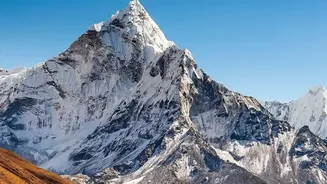
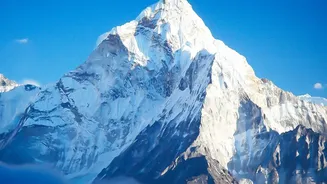
The core of the problem lies in a simple fact: the Himalayan region is warming at a rate nearly double the global average. This accelerated warming attacks the mountains’ structural integrity in several ways. Firstly, it pushes the freezing line—the altitude
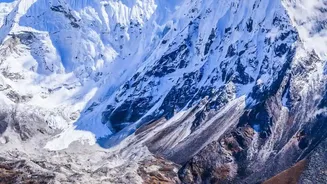
where temperatures stay below zero—further up the slopes at a rate of roughly 100 meters per decade. This exposes previously frozen rock to freeze-thaw cycles, which act like a hammer, widening cracks and weakening the rock face. Secondly, the very glue holding many steep slopes together, known as permafrost, is thawing. This permanently frozen ground binds rock and soil, and as it degrades, the risk of entire slopes collapsing increases dramatically.
The Menace of Melting Glaciers
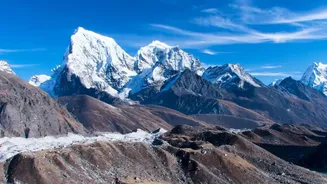
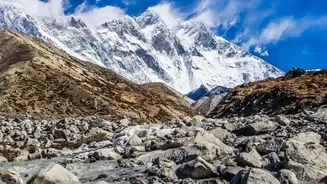
Nepal's glaciers, the 'water towers of Asia', are retreating at an alarming pace, losing mass equivalent to over half a meter of thinning each year. This rapid melt creates a particularly dangerous phenomenon: Glacial Lake Outburst Floods (GLOFs). As glaciers shrink, they leave behind vast quantities of meltwater that collect in lakes, often dammed only by unstable piles of rock and debris called moraines. These natural dams can breach suddenly, unleashing a torrent of water, ice, and boulders downstream with the force of a tsunami. Nepal has 21 glacial lakes identified as potentially dangerous, and has recorded 26 GLOF events since 1977, which have wiped out villages, roads, and crucial hydropower plants.
When the Rains Don't Follow the Rules
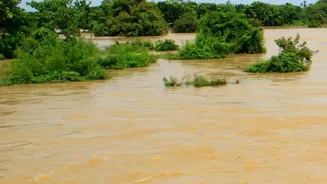
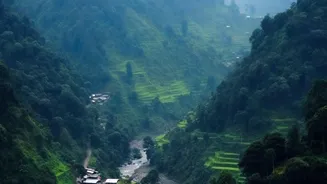
Climate change isn't just about heat; it's also making monsoon patterns more erratic and intense. Instead of steady, predictable rainfall, the region is experiencing prolonged dry spells followed by extreme downpours. This short-duration, high-intensity rainfall is a major trigger for landslides in Nepal's mid-hills. The ground, baked hard by drought, cannot absorb the sudden deluge, leading to rapid soil saturation and slope failure. Over 70% of disaster-related fatalities in Nepal in recent decades are linked to floods and landslides, events that are becoming more frequent and severe due to these changing weather patterns.
A Human and Economic Catastrophe
The consequences of this instability are devastating for the people of Nepal. Communities living in narrow river valleys are in a constant state of risk. A recent collapse of rock and ice from Langtang Lirung mountain on August 26, 2026, killed over 1,300 people and left thousands more missing as a wall of debris swept through downstream communities. Beyond the tragic loss of life, the economic toll is staggering. Floods and landslides routinely destroy homes, farmland, bridges, and critical infrastructure like hydropower plants, which are vital to Nepal's economy. Between 2021 and 2024, Nepal lost billions of rupees in damage to its hydropower sector alone from monsoon-related disasters.
The Limits of Adaptation
While Nepal is working on solutions like community-based early warning systems for floods and GLOFs, experts warn there are limits to adaptation. Some of the destabilization from decades of warming is already locked in, meaning certain risks cannot be entirely avoided. Better high-altitude monitoring can help, but in some cases, the danger may become so great that relocating entire settlements is the only viable option. Ultimately, the pressure on Nepal's mountains is a direct symptom of a global problem. Scientists stress that while local measures are crucial, the most important action is a global reduction in the greenhouse gas emissions that are driving climate change.