



A New Eye on the Cosmos
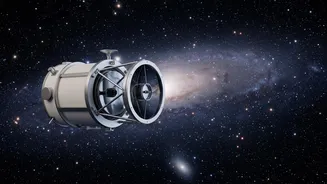
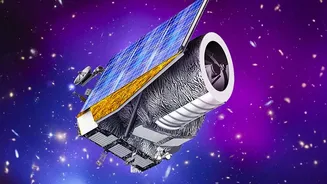
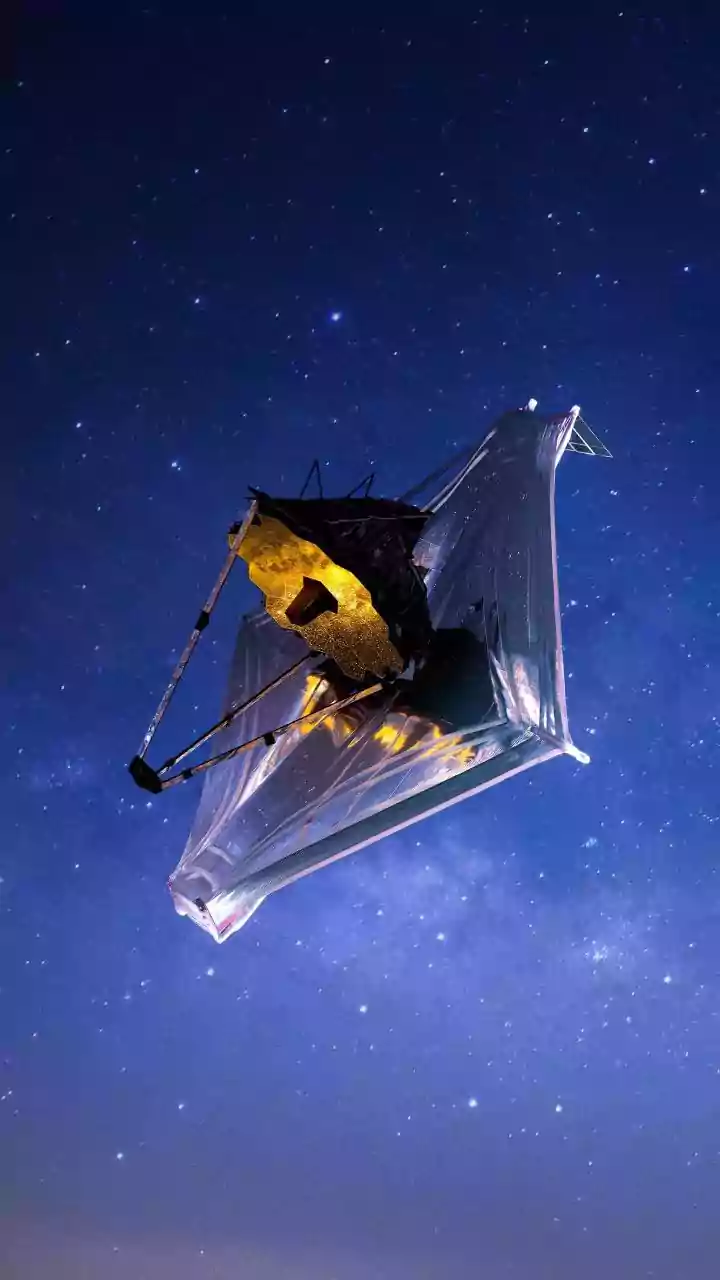
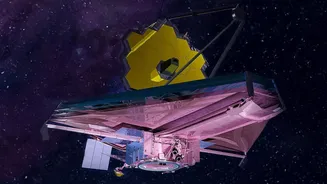
Launched in August 2026, the Nancy Grace Roman Space Telescope is NASA's next great observatory, poised to build on the legacies of the Hubble and James Webb space telescopes. Named after NASA's first chief of astronomy, the visionary 'Mother of Hubble,'
this mission has a distinct and powerful purpose. While its predecessors provided deep, narrow views of cosmic curiosities, Roman is designed for breathtaking scale. Its primary tool is the Wide Field Instrument, a 300-megapixel camera that gives it a field of view at least 100 times larger than Hubble's. This panoramic capability is the key to its main task: conducting enormous surveys of the sky.
The Power of a Wide-Angle Lens
Think of Hubble as a microscope, perfect for examining a single galaxy in exquisite detail. Roman, by contrast, is a wide-angle lens designed to create a massive atlas of the universe. Where Hubble’s iconic Ultra-Deep Field image took weeks of observation to reveal about 10,000 galaxies in a tiny patch of sky, Roman could capture a similarly deep image containing millions of galaxies in a fraction of the time. These large sky surveys involve systematically scanning vast portions of the heavens, collecting data on billions of stars and galaxies. This approach isn't about studying one object of interest; it's about creating a massive, statistically rich dataset that can reveal the grand patterns of the cosmos and provide targets for other telescopes, like Hubble, to study in more detail.
Hunting for Cosmic Mysteries
Two of the biggest puzzles in modern physics are dark energy and dark matter. Dark energy is the mysterious force causing the expansion of the universe to accelerate, while dark matter is the invisible 'glue' that holds galaxies together. Together, they make up about 95% of the universe, yet we know almost nothing about them. Roman's surveys are designed to tackle these questions head-on. By precisely measuring the positions, shapes, and distances of hundreds of millions of galaxies, astronomers can map the influence of dark matter and trace the history of the universe's expansion. This will allow scientists to test theories about the nature of dark energy and whether its effects have changed over cosmic time.
A Galaxy of New Worlds
Beyond the cosmic structure, Roman is also a prolific planet hunter. While missions like Kepler and TESS found thousands of exoplanets by watching for the dimming of a star as a planet passes in front, Roman will primarily use a different technique called gravitational microlensing. This method detects planets by observing how the gravity of a star and its orbiting worlds can bend and magnify the light from a more distant, background star. Microlensing is especially sensitive to planets that are farther from their star, in orbits more like Jupiter or Saturn, as well as smaller, rocky worlds and even 'rogue' planets that wander through space without a host star. Scientists expect Roman to discover tens of thousands, or even more than 100,000 new exoplanets, creating a massive census that will help us understand how common planetary systems like our own truly are.
An Open-Source Cosmos
One of the most revolutionary aspects of the Roman mission is its data policy. All of the information gathered from its core surveys will be made publicly available to the entire scientific community without any proprietary period. The telescope will generate an unprecedented amount of data, creating a treasure trove for astronomers around the world to mine for decades to come. This open-access approach ensures that the observatory's discoveries won't be limited to its primary mission teams. Any scientist can propose new ways to analyze the data, leading to unforeseen insights into everything from asteroids in our solar system to the most distant supermassive black holes. Roman is not just a tool for a few; it is a public resource for exploring the universe.