






Shinjuku Gyoen National Garden, Tokyo
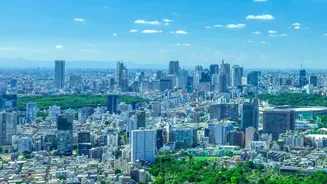
Mere steps from one of the world's busiest train stations, Shinjuku Gyoen National Garden offers a sprawling, 144-acre sanctuary. This former imperial garden masterfully blends three distinct styles. You can wander through the symmetry of a French Formal
garden, relax on the wide-open lawns of an English Landscape garden, and find serenity by the ponds and teahouses of a Japanese Traditional Garden. The park's sheer size means that even on busier days, you can find a quiet corner to yourself. Its impressive greenhouse contains a lush collection of tropical and subtropical plants, providing another layer of escape. With over a thousand cherry trees, it's a premier spot for blossom viewing in the spring, but its diverse landscapes ensure it is a beautiful retreat year-round.
Rikugien Garden, Tokyo
Considered one of Tokyo's most beautiful traditional strolling gardens, Rikugien is a masterpiece of Edo-period landscape design. The name translates to "Garden of Six Poems," and it was created to reproduce 88 miniature scenes from classical Japanese poems. A network of trails guides visitors around a large central pond, past man-made hills, and through forested areas, with each turn revealing a new, perfectly composed view. It takes about an hour to walk the entire path at a leisurely pace. Located in a quiet residential area, the garden feels worlds away from the city's core. It’s particularly famous for its weeping cherry tree near the main gate and stunning autumn colors, with special evening illuminations during these peak seasons.
Arashiyama Bamboo Grove, Kyoto
While immensely popular, a walk through the Arashiyama Bamboo Grove can be a truly transcendent experience if timed correctly. The path is open 24 hours a day, and an early morning visit, ideally before 8 a.m., allows you to experience the otherworldly atmosphere in near solitude. As sunlight filters through the impossibly tall, dense stalks of bamboo, it creates a magical, serene green light. The only sounds are the rustling of leaves and the gentle creaking of the bamboo swaying in the wind. This iconic Kyoto location offers a powerful connection to nature. For the quietest experience, aim for a weekday visit outside of peak cherry blossom or autumn foliage seasons.
Kyoto Gyoen National Garden, Kyoto
This vast public park surrounds the Kyoto Imperial Palace and offers a different kind of tranquility. At 1.3 kilometers long and 0.7 kilometers wide, its scale is immense, providing ample space for peaceful walks, runs, or picnics. Originally the residential area for court nobles during the Edo period, the estate was transformed into a national garden after the capital moved to Tokyo. Its wide gravel paths, mature trees, and spacious lawns are beloved by locals. While the Imperial Palace itself requires separate entry, the surrounding park is free and open at all times, serving as a green lung in the heart of the city and a genuine escape from the more crowded tourist sites.
The Philosopher's Path, Kyoto
This scenic stone path follows a tranquil canal in the Higashiyama district, stretching for about two kilometers. It gets its name from Nishida Kitaro, a renowned Japanese philosopher who was said to walk this route daily for meditation on his way to Kyoto University. The path is famously lined with hundreds of cherry trees, making it a top spot for blossom viewing in the spring. However, it retains a peaceful charm year-round, with numerous smaller temples and shrines nestled just off the main walkway. While it can be busy during peak seasons, an early morning or evening stroll reveals its contemplative character, inviting you to slow down and take in the quiet beauty of the flowing water and surrounding neighborhood.