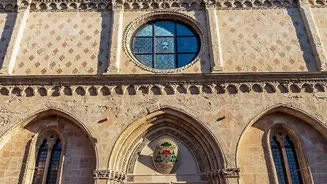









A Sanctuary in the Wilderness
One of Nainital's oldest and most significant colonial structures is St. John in the Wilderness. Established in 1844, this Anglican church is a stunning example of Neo-Gothic architecture, nestled amidst a dense deodar forest away from the town's centre.
Its name was coined by Daniel Wilson, the Bishop of Calcutta, who fell ill during his visit to lay the foundation stone and had to take shelter in an unfinished cabin in the woods. This sense of seclusion remains one of the church’s defining characteristics, offering a peaceful retreat for visitors. The church isn't just an architectural marvel; it's a keeper of Nainital's history. Inside, a brass plaque honours the 151 victims of the devastating landslide of 1880, and the serene graveyard behind the church is the final resting place for many early residents of the town.
Light Through Victorian Glass
The interiors of St. John in the Wilderness are just as compelling as its forested setting. The church is particularly noted for its beautiful Belgian stained-glass windows. These panels, installed in the 1860s, were created by the London-based firm Ward and Hughes and cast a serene, colourful glow upon the aged wooden pews and stone floors. One of the most significant memorial windows, depicting scenes of the resurrection, was installed in memory of those who perished in the 1880 landslide. Over the decades, some of the original details have faced the ravages of time, but the surviving glasswork continues to be a captivating work of art, telling biblical stories and memorialising the town's past in vibrant hues. The quiet atmosphere inside, punctuated only by the light streaming through the glass, offers a profound sense of peace.
The Gothic Jewel of Mall Road
In contrast to the seclusion of St. John's, the St. Francis' Catholic Church stands proudly on the bustling Mall Road, offering a sanctuary right in the heart of Nainital. Known affectionately as the 'Lake Church', it was first built in 1868 and later expanded in the early 20th century to accommodate a growing congregation. This church, dedicated to St. Francis of Assisi, is another fine example of Gothic architectural style, with its imposing stone facade and spires creating a picturesque landmark against the backdrop of the lake. Despite its central location, the church maintains a tranquil aura. Its stone-paved walls and quiet interiors provide a stark, peaceful contrast to the energy of the town just outside its gates. Visitors often praise the serene and relaxing vibes found within its historic walls.
Preserving a Colonial Legacy
These churches, along with others like the Methodist Church established in 1856, are more than just places of worship; they are integral parts of Nainital's identity. They serve as architectural landmarks and tangible links to the town's origins as a British hill station. The preservation of their quiet interiors, intricate stained glass, and solid stone structures is a continuous effort. While some original features like chandeliers and brass works have been lost over time, the core structures remain as cherished heritage sites. For travellers seeking to understand the soul of Nainital beyond its scenic views, these churches offer a journey back in time. They stand as quiet, enduring witnesses to the town's history, offering spiritual solace and a deep appreciation for art and architecture that has stood the test of time.