


A String of Himalayan Tragedies
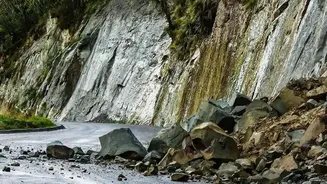
In recent years, the Himalayan region has been shaken by a series of catastrophic events linked to its volatile cryosphere. In August 2026, a massive ice and rock collapse near the Nepal-Tibet border triggered a devastating flood that swept through communities.
This followed the October 2023 Glacial Lake Outburst Flood (GLOF) in Sikkim, where the South Lhonak lake breached its banks, destroying a major dam and causing widespread destruction downstream. Another major incident was the 2021 Chamoli disaster in Uttarakhand, where a rock and ice avalanche led to a deadly flash flood, killing over 200 people and wiping out two hydropower projects. These are just a few of several major disasters that have served as a grim reminder of the lurking dangers in the high mountains. These events are often complex, cascading crises, where a single trigger like a landslide can lead to a debris flow, river blockage, and a sudden, violent flood.
The 'Third Pole' is Melting
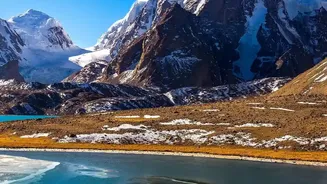
The Hindu Kush Himalaya region holds the largest volume of ice outside the polar caps, earning it the name 'Third Pole'. These glaciers are the lifeblood for nearly two billion people, feeding ten major Asian river systems, including the Ganga, Indus, and Brahmaputra, which are crucial for drinking water, agriculture, and hydropower in India. However, this vital water tower is under threat. Reports confirm that glaciers in the region are melting at an accelerating rate, losing ice much faster since the year 2000. This rapid melt not only threatens long-term water security but also creates immediate dangers. As glaciers retreat, they leave behind vast lakes, often dammed by unstable walls of loose rock and sediment known as moraines. Many of these lakes are expanding rapidly, becoming ticking time bombs for downstream communities.
What is Glacial Monitoring?
Glacial monitoring is the systematic observation of glaciers to understand their behaviour and assess potential hazards. Scientists use a combination of tools to do this. Satellite imagery from organisations like ISRO helps track long-term changes in a glacier's size and the expansion of glacial lakes. On the ground, researchers measure 'glacier mass balance'—the difference between snow accumulation and ice melt—to determine if a glacier is shrinking or growing. This is complemented by ground sensors, radar, and seismic instruments that can detect sudden movements, instability on slopes, or the vibrations from an avalanche. The primary goal is to identify risks like GLOFs or ice avalanches before they turn into catastrophes.
From Data to Early Warning
The data collected through monitoring is the foundation for life-saving early warning systems. When scientists identify a particularly dangerous glacial lake, they can assess the risk to downstream areas. If monitoring detects signs of instability—like rapid lake level rise or ground movement—authorities can be alerted. In an ideal scenario, this triggers an evacuation plan for vulnerable villages, as was successfully done in a 2025 event in the Swiss Alps, where a village was evacuated days before a major collapse. However, implementing this in the vast and rugged Himalayas is a monumental challenge. The 2023 Sikkim flood occurred even though the South Lhonak lake was known to be dangerous, highlighting a gap between scientific knowledge and on-ground disaster preparedness. Experts argue for an integrated observation network to provide real-time warnings to communities before a flood reaches them.
A National Security Imperative
The importance of glacial monitoring extends beyond disaster prevention. The health of Himalayan glaciers is directly tied to India's water security. Understanding how and when meltwater is released is crucial for managing river flows, which support agriculture for millions and are vital for the country's hydropower ambitions. Furthermore, many of these glaciers and rivers are transboundary. Events in one country can have devastating impacts on another, as seen in the recent Nepal disaster which affected communities downstream. This makes cross-border cooperation and data sharing with neighbours like Nepal, Bhutan, and China not just an environmental necessity, but a matter of national security and regional stability.