


First, Carefully Inspect Your Filter
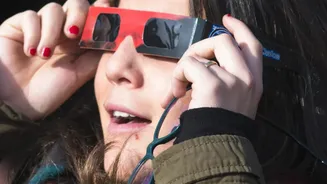
Before you do anything, you need to conduct a thorough inspection of your eclipse glasses or solar viewer. Hold the filter up to a bright light source, like an LED flashlight or a bare lightbulb. Do not use the sun for this test. Look closely at the filter material
from both sides. What you are looking for are any imperfections, no matter how small. Scratches, pinholes, tears, or delamination (where the filter layers are separating) are all red flags. If you see any light punching through a specific point, the filter is compromised. If the cardboard or plastic frame is bent, torn, or separated from the lenses, it can allow unfiltered sunlight to leak in from the sides, which is also dangerous. Any filters that are more than three years old or show any signs of wear and tear should be treated with suspicion.
The Danger of a Damaged Filter
It might seem like a tiny scratch is no big deal, but it is. A proper solar filter, compliant with the ISO 12312-2 international safety standard, blocks more than 99.99% of the sun's intense visible light, as well as harmful ultraviolet (UV) and infrared (IR) radiation. A scratch, pinhole, or tear is a breach in that protection. It can allow concentrated solar rays to pass directly into your eye, potentially causing a severe burn to your retina. This condition, known as solar retinopathy, can lead to permanent blind spots or vision loss. The most frightening part is that your retina has no pain receptors, so you won't feel the damage as it is happening.
Rule Number One: Do Not Try to Fix It
Your first instinct might be to find a quick fix, perhaps with tape or a marker. Do not attempt to repair a scratched or punctured solar filter. Home remedies cannot restore the filter's ability to block the sun's dangerous radiation. While methods using baking soda or toothpaste are sometimes suggested for regular eyeglasses, they are completely unsuitable for solar filters. These methods are abrasive and will only further damage the delicate filter material and its protective coatings, making it even less safe. The only safe rule to follow is this: if your solar filter is scratched, punctured, torn, or damaged in any way, discard it. When it comes to your eyesight, there is no room for risk.
Safe Alternative: Pinhole Projection
So your glasses are unusable. Don't despair! You can still experience the eclipse safely using an indirect viewing method. The simplest and most popular is the pinhole projector. This method involves projecting an image of the sun onto a surface, so you are not looking at the sun directly. To make one, you just need two pieces of stiff white paper or card. Punch a small, clean hole in the center of one piece of paper. With your back to the sun, hold that paper up and let the sunlight pass through the pinhole onto the second piece of paper, which acts as a screen. You will see a small, inverted image of the sun. As the eclipse progresses, you will see the moon taking a bite out of the sun's projection. For a larger and more stable image, you can create a projector using a long cardboard box.
Other Indirect Viewing Methods
You can find other pinhole projectors in everyday objects. A kitchen colander, for instance, will project dozens of tiny crescent suns onto the ground. The gaps between tree leaves can also create a natural pinhole effect, dappling the ground with eclipse images. You can even create a projector with your hands. With your back to the sun, cross the fingers of one hand over the other to create a waffle pattern; the small gaps will project the crescent sun onto the ground below. The key with any indirect method is that you are always looking at a projected image, with your back to the actual sun. Never look at the sun through the pinholes themselves.
Finding Last-Minute Certified Glasses
If you still want the experience of viewing the eclipse directly, your only safe option is to acquire a new, undamaged pair of certified solar eclipse glasses or a handheld viewer. Look for products that are explicitly stated to be compliant with the ISO 12312-2 international standard. Be wary of fakes, especially when buying online. Claims of being 'NASA-approved' are a red flag, as NASA does not approve or certify any particular brand of glasses. Your best bet is to purchase from reputable vendors, astronomical societies, science museums, or local university science departments, which often sell certified glasses leading up to an eclipse.