


The Mystery of the Missing Minis
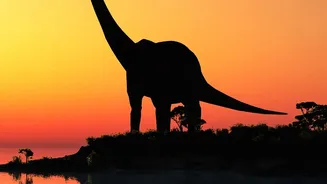
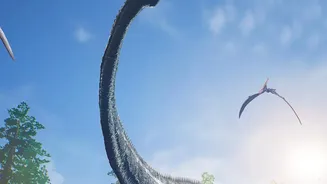
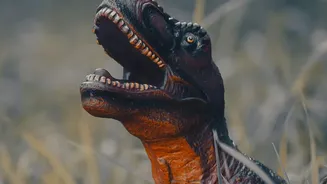
For decades, palaeontologists have been puzzled by a strange gap in the dinosaur family tree. While dinosaurs achieved colossal sizes, with giants like Argentinosaurus weighing over 80 tons, there were almost no genuinely tiny dinosaurs. The smallest
known non-avian dinosaurs were still quite large, weighing around 450 grams—roughly the size of a rabbit.. This is odd because in modern ecosystems, small animals are the norm, not the exception. About 75 percent of living mammal species are smaller than the smallest known non-avian dinosaur.. The long-standing assumption was that maybe their fragile bones just didn't survive to become fossils. But new research suggests this isn't the case, as fossil sites that preserve dinosaurs often contain the much smaller bones of contemporary mammals, lizards, and amphibians.. The absence, it seems, was not an accident of preservation, but a real biological phenomenon.
A New Theory of Competition
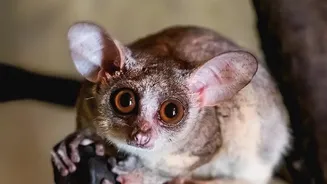
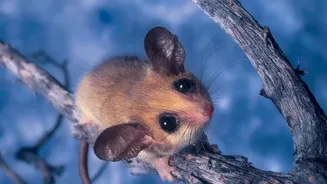
A recent study published in the journal Evolution proposes a compelling new explanation: dinosaurs never got tiny because mammals got there first.. According to researchers, our small, furry ancestors may have effectively “gate-kept” the ecological niches for tiny animals.. Using mathematical models based on how animals convert energy into offspring, scientists found that physiology alone couldn't explain the lack of mouse-sized dinosaurs.. The models predicted that tiny dinosaurs should have existed.. The fact that they didn't points to an external pressure. The most likely culprits were early mammals, which were already successfully occupying roles as small, nocturnal insect-eaters and seed-eaters.. This created a competitive barrier, preventing dinosaurs from shrinking down to fill those same roles. The relationship wasn't just one-sided.
A Two-Way Street of Suppression
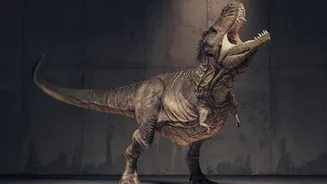
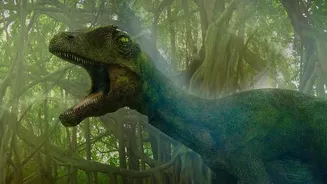
This new perspective recasts the 150-million-year coexistence of dinosaurs and mammals as a more complex, two-way street of evolutionary suppression. It’s long been accepted that the presence of large predatory dinosaurs kept mammals from evolving into large sizes.. Our ancestors stayed small and largely nocturnal to avoid becoming a T-rex’s lunch.. But the new study suggests that mammals, in turn, prevented dinosaurs from evolving to be small.. Essentially, the giants kept the mammals small, and the small mammals kept the dinosaurs from becoming giants in miniature. Each group dominated one end of the size spectrum, effectively boxing the other out. This competitive standoff lasted for millions of years, shaping the evolution of both lineages in profound ways.
The Real Reason Mammals Thrived
This theory also changes how we view the aftermath of the asteroid impact that wiped out the dinosaurs 66 million years ago. The conventional wisdom is that mammals, freed from the threat of dinosaur predation, could finally evolve into larger sizes and fill the empty ecological roles.. While that is still true, the new findings add a critical layer of detail. When the non-avian dinosaurs vanished, it wasn't just the large predators that disappeared. The smaller dinosaurs, which may have been competing with mammals, were also gone. This cleared the entire board. Mammals didn't just inherit a world free of giant killers; they inherited a world full of vacant jobs, both large and small. Research shows that following the extinction, there was an explosion in diversity among mammals of all sizes, not just the large ones.. The removal of competition across the board gave mammals the unprecedented evolutionary opportunity to diversify into the vast array of forms we see today.