





A New Kind of Space Telescope
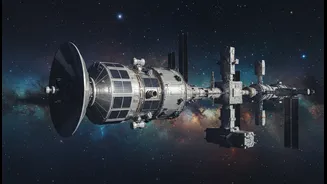
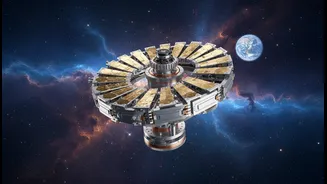
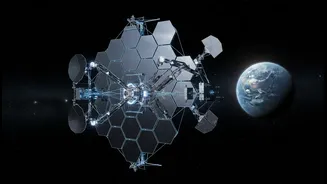
Scheduled for launch in the 2040s, the Habitable Worlds Observatory is NASA's next great flagship mission, following in the footsteps of Hubble and the James Webb Space Telescope (JWST). Its primary goal is ambitious: to directly image at least 25 Earth-like
planets and scan their atmospheres for chemical biosignatures like oxygen and methane, which could be signs of life. To do this, it will need unprecedented stability and a powerful coronagraph capable of blocking starlight that is 10 billion times brighter than the planet it’s observing. But the most revolutionary thing about HWO isn't its scientific goal—it's the philosophy behind its design.
The Limits of Fixed Designs
Previous space telescopes, for all their incredible success, were largely built as single-use instruments. The James Webb Space Telescope, for instance, is a marvel of engineering, but it was not designed to be serviced. It was sent to its operational orbit at the second Lagrange point (L2), about 1.5 million kilometers from Earth, with the technology it had at launch. Any component failure or damage, like the micrometeoroid impacts it has already sustained, is permanent. The Hubble Space Telescope was an exception, designed for servicing by Space Shuttle astronauts in low-Earth orbit. This allowed for repairs and the installation of new, more advanced instruments over its 30-plus years of operation, dramatically extending its life and scientific output.
Designed to Evolve
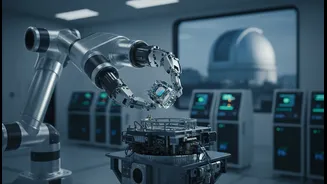
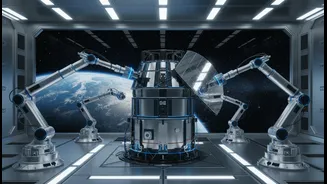
HWO learns from both of these predecessors. Like JWST, it will be located at the distant L2 Lagrange point, but like Hubble, it is being explicitly designed to be serviced. This represents a fundamental shift in strategy for NASA. Instead of a fixed, unchangeable observatory, HWO is conceived as an adaptable platform. The core of this new approach is modularity. Key systems—from scientific instruments and computers to sensors and electronics—will be designed as standardized, line-replaceable units (LRUs). This means that individual components can be swapped out without having to replace the entire observatory.
Robotic Servicing Changes Everything
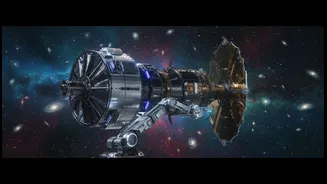
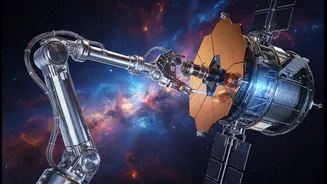
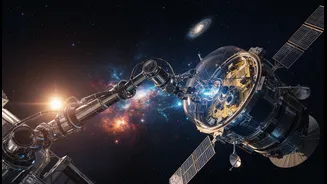
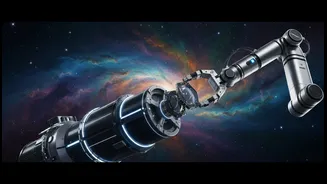
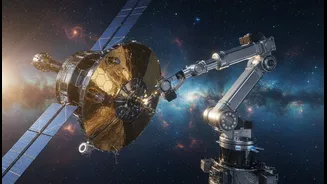
Since its orbit is far too distant for human astronauts to visit with current technology, HWO's upgrades will be performed entirely by robots. NASA envisions a future where autonomous or remotely operated servicing spacecraft can dock with the observatory, unlock and slide out old modules, and insert new ones. This could mean replacing a worn-out part, repairing damage, or, most excitingly, installing a brand-new scientific instrument with technology that wasn't even invented when HWO first launched. This approach not only future-proofs the multi-billion-dollar investment but is also expected to drive the growth of a commercial in-space servicing industry.
A Future-Proof Search for Life
The long-term benefits are immense. Imagine a scenario 20 years after HWO's launch when a breakthrough in sensor technology allows for much more sensitive detection of atmospheric gases. With a fixed-design telescope, scientists would have to wait decades and spend billions on a whole new mission to take advantage of it. With HWO, they could simply commission a robotic servicing mission to install the new instrument. This capability turns the telescope from a static snapshot of our technological ability at one moment in time into a dynamic, evolving platform for discovery. It ensures that our premier tool in the search for habitable worlds can be sharpened and improved as our own knowledge and capabilities grow, keeping it at the cutting edge for decades.