


Our Closest Galactic Neighbour
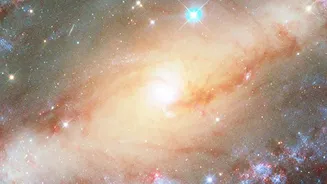
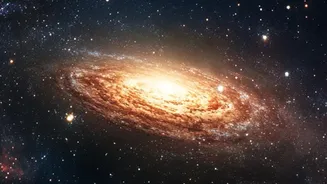
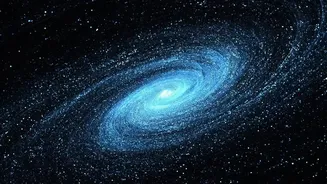
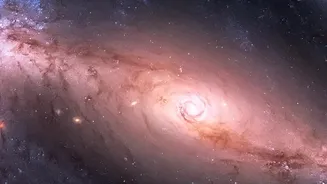
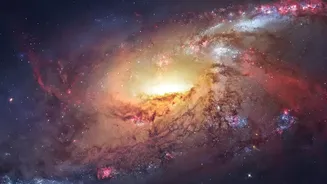
At just 2.5 million light-years away, the Andromeda galaxy, also known as M31, is the closest major galaxy to our own Milky Way. It is so large and relatively close that on a clear, dark night, it can be seen with the naked eye as a faint, fuzzy smudge
in the sky. For decades, astronomers have studied Andromeda to understand how large spiral galaxies like our own form and evolve. We know that Andromeda and the Milky Way are hurtling towards each other and are destined to collide and merge in about 4.5 billion years. This makes understanding Andromeda not just an academic exercise, but a preview of our own distant future.
Redefining 'Galactic Growth'
When we think of growth, we might imagine something getting physically wider. But for galaxies, growth is more about their vitality—specifically, their ability to form new stars. This process, known as star formation, is how galaxies build themselves up over billions of years. The headline's mention of a change in "growth" refers to this very process. Recent observations have shown that Andromeda's star-making ability has been changing dramatically, providing a fascinating insight into its life cycle. After a major burst of star birth about two billion years ago, likely caused by a merger with a smaller galaxy, Andromeda has been quietly slowing down.
Hubble's Incredible Cosmic Census
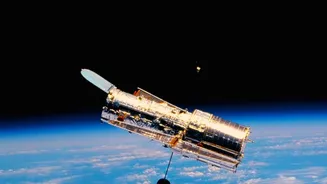
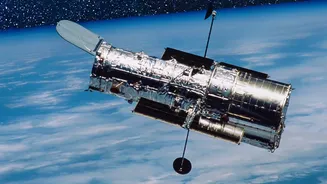
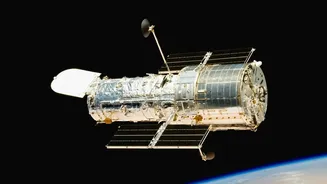
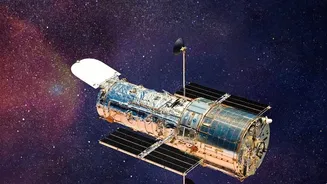
To uncover this trend, astronomers undertook a monumental task. Using the unparalleled sharp vision of the Hubble Space Telescope, they conducted two massive surveys, the Panchromatic Hubble Andromeda Treasury and its southern counterpart. By mapping about two-thirds of Andromeda's sprawling disk, they created a cosmic census, cataloging around 200 million individual stars. As University of Washington astronomer Ben Williams explained, these individual stars act as a "fossil record" of the galaxy's history. By analysing the colour and brightness of the stars—younger, massive stars are blue and hot, while older stars are redder and cooler—scientists could reconstruct a detailed history of when and where stars have been forming across the galaxy.
A Galaxy Entering Middle Age
The results were stunning. The data revealed that for the last 500 million years, star formation in Andromeda has been on a steady decline. About 500 million years ago, the galaxy was churning out new stars at a rate of about one solar mass per year. But in the last 40 million years, that rate has dropped dramatically. Today, the rate has plummeted to about one-fifth of a solar mass per year. Most of this slowdown is happening in a giant ring of gas and dust where most of the galaxy's star formation has recently been concentrated. It seems Andromeda is not running out of fuel, but is simply entering a quieter, more settled phase of its life—what some astronomers are calling its galactic 'middle age'.
A Case of Galactic Interference?
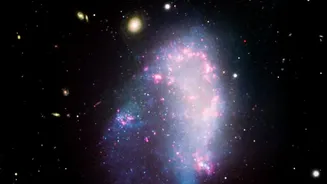
The slowdown isn't uniform across the entire galaxy. One particularly quiet region is located near M32, one of Andromeda’s small satellite galaxies. The data suggests that star formation in this area began to decrease around 60 million years ago. While astronomers can't be certain, the timing and location make M32 a prime suspect. It is likely that a past interaction, where the smaller galaxy plunged through Andromeda's disk, disrupted the gas clouds and effectively shut down star formation in that zone. This finding highlights the complex and sometimes destructive dance that shapes galaxies over cosmic time.