





More Than Just 'Natural' Disasters
When a wall of water and debris crashes through a mountain valley, the immediate cause might be labelled a cloudburst or a landslide. While technically true, this view is dangerously incomplete. Many recent catastrophes, from Uttarakhand to Nepal, reveal
a recurring pattern: a cascade of hazards where one event triggers another. An avalanche can dam a river, which then bursts, causing a flash flood downstream. These are not separate acts of nature but chain reactions. The labels we use often mask the fact that the underlying drivers—geology, climate change, and human activity—are working in concert, turning predictable hazards into unprecedented disasters.
The Unstable Foundation: A Young Mountain Range
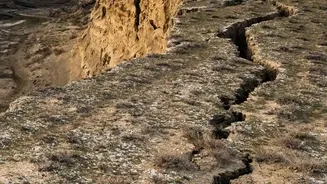
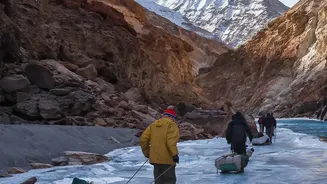
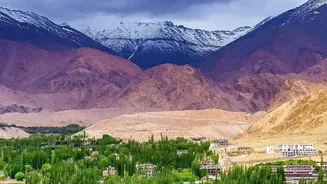
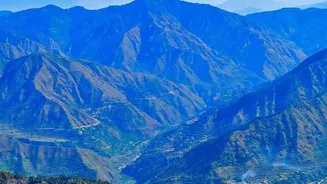
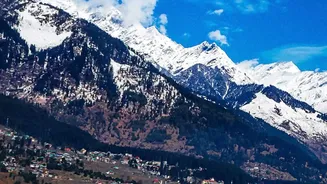
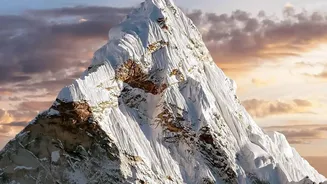
The Himalayas are, geologically speaking, the youngest and most active mountain range on Earth. Formed by the ongoing collision of the Indian and Eurasian tectonic plates, the mountains are inherently fragile, marked by fractured rock and steep, unstable slopes. This makes the region naturally prone to seismic activity and landslides, even without other factors. For millennia, this geological dynamism was a baseline condition. But now, this natural fragility is being dangerously amplified, creating a landscape where even a small disturbance can have massive consequences.
The Climate Change Accelerant
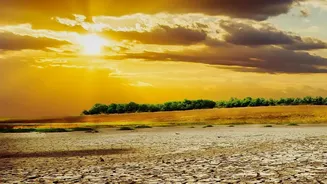
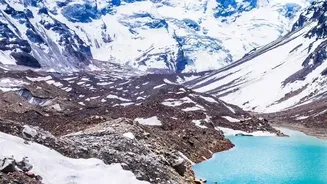
Climate change is acting as a powerful accelerant on the region's inherent risks. The Hindu Kush Himalaya region is warming significantly faster than the global average. This rapid warming has two critical effects. First, it is causing glaciers to melt at an alarming rate. This not only creates and expands thousands of unstable glacial lakes, held back only by loose rock and sediment, but also thaws permafrost—the frozen ground that acts like glue for high-altitude slopes. When these natural dams fail, it results in a Glacial Lake Outburst Flood (GLOF), a sudden release of enormous volumes of water. Second, a warmer atmosphere holds more moisture, leading to more erratic and intense rainfall, including sudden, extreme downpours known as cloudbursts. These events saturate the already fragile slopes, triggering devastating landslides and flash floods.
The Human Factor: A Force Multiplier
If geology provides the stage and climate change speeds up the action, unplanned human activity often writes the final, tragic script. Across the Indian Himalayas, rapid and often poorly engineered infrastructure development has become a major contributing factor to disaster intensity. The construction of roads, dams, tunnels, and sprawling tourist facilities frequently involves blasting and cutting into fragile slopes, disrupting natural drainage patterns and removing the forests that help bind the soil. This destabilises the mountainside, turning heavy rainfall into a guaranteed catastrophe. Furthermore, settlements and vital infrastructure, including hydropower projects, are often built in high-risk zones along riverbanks and on landslide-prone terrain, putting more lives and property directly in harm's way.
A Cascade of Calamities
Understanding the links is key. A rock-and-ice avalanche, made more likely by melting glaciers and thawing permafrost (climate change), can crash into a river valley (geology). This debris can temporarily block the river, forming a makeshift dam. When the immense pressure of the water breaks this dam, it unleashes a destructive torrent of water, mud, and boulders downstream, far more powerful than a normal flood. This torrent then slams into roads and hydropower plants built on the riverbanks (human factor), compounding the destruction. This is the cascade effect: a series of interconnected failures where GLOFs, landslides, and extreme weather events feed into one another, creating a multi-hazard crisis that is far greater than the sum of its parts.