






A Milestone for Indian Education
On August 2, 2026, Alliance University unveiled its AU-QUASAR campus in Bengaluru's Electronic City, marking a pivotal moment for deep-tech education in the country. The full name, Alliance University – Quantum AI School for Advanced Research, signals
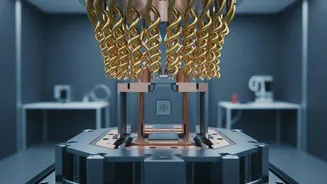
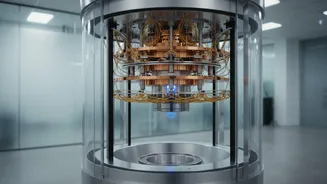
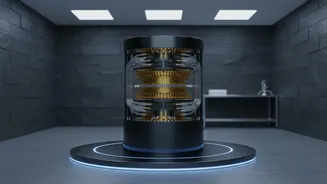
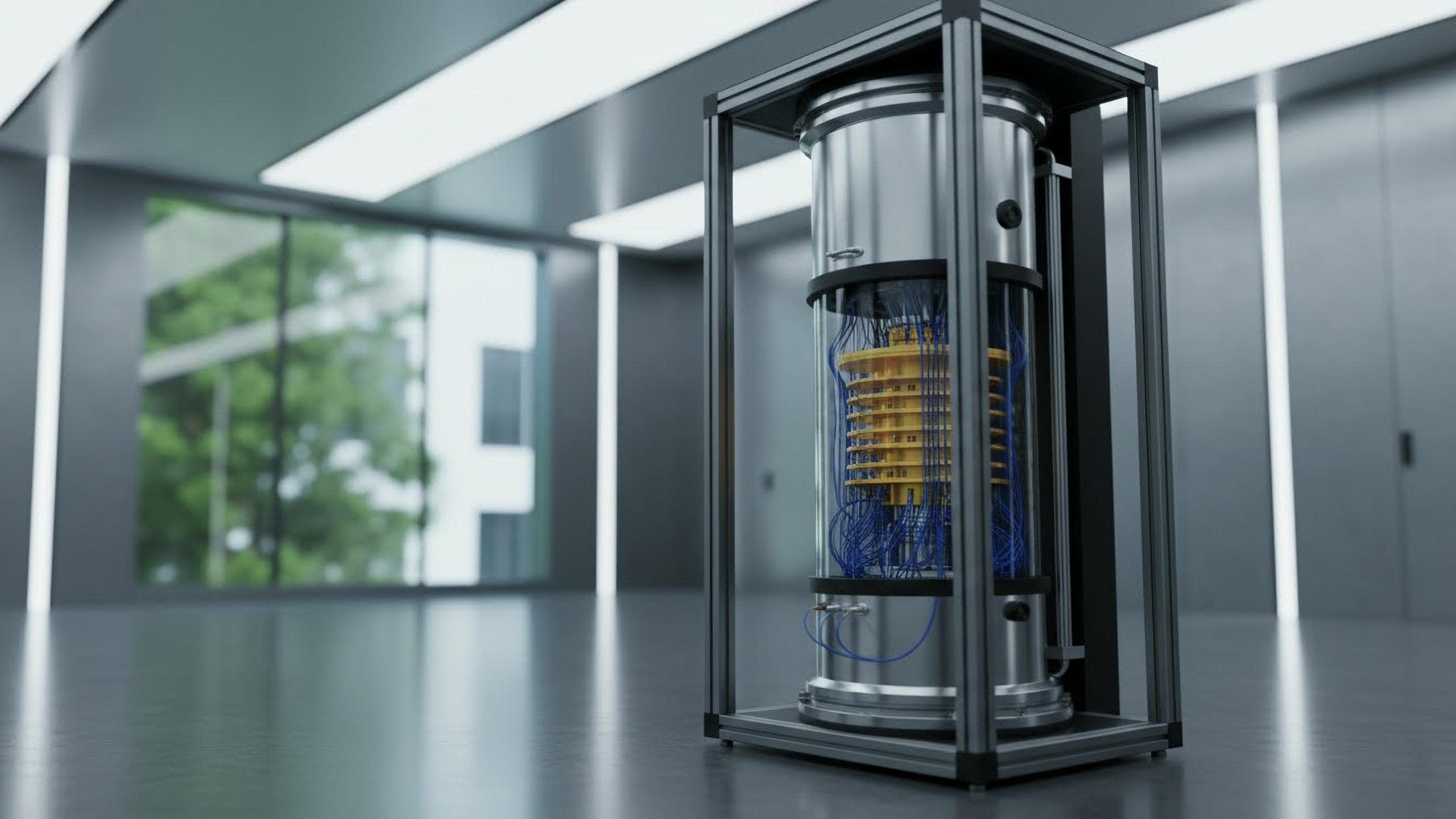
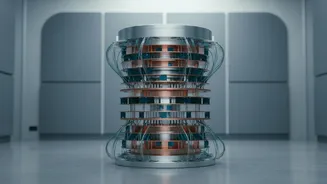
a bold new direction. At the heart of this initiative is the physical installation of an 8-qubit quantum computer—a first for a private university in India. Inaugurated by tech luminaries including Infosys co-founder Kris Gopalakrishnan, the centre is more than just a new building; it represents a strategic shift towards creating technology, not just consuming it. By placing a working quantum computer directly in an academic environment, AU-QUASAR aims to build an ecosystem that nurtures India's next generation of innovators in fields that will define the future.
What is an 8-Qubit System?
To understand the significance, it helps to know how different this is from the computers we use daily. Classical computers process information using 'bits,' which can be either a 0 or a 1. Quantum computers use 'qubits,' which can exist in multiple states at once thanks to the principles of quantum mechanics. This allows them to tackle complex problems in areas like drug discovery, materials science, and financial modelling far more efficiently than even the most powerful supercomputers. While global tech giants are racing towards systems with thousands of qubits, an 8-qubit machine is a powerful and essential tool for learning and research. It provides the perfect platform for students and researchers to learn the fundamentals of designing quantum circuits, testing algorithms, and running experiments on actual hardware, bridging a critical gap between theoretical knowledge and practical application.
Hands-On Access and Homegrown Tech
What makes the AU-QUASAR centre particularly special is that its quantum computer is not a simulation or a remote system accessed via the cloud. The machine, named 'QVidya', is physically installed and commissioned on campus. This hands-on access is a game-changer for deep-tech learning. Furthermore, the QVidya system was designed and built by QpiAI, a Bengaluru-based startup. This collaboration between Alliance University and QpiAI highlights a growing trend of industry-academia partnerships aimed at building sovereign capabilities. Students will work on a homegrown Indian technology, a point of emphasis for Dr. Nagendra Nagaraja, the founder of QpiAI, who noted this creates a new benchmark for quantum education in the country. It's a tangible step toward self-reliance in a strategically critical technology sector.
Powering India's Quantum Ambitions
This initiative doesn't exist in a vacuum. It directly aligns with the goals of India's National Quantum Mission (NQM), a government-backed initiative to foster indigenous quantum technology development. The NQM aims to position India as a global leader in the field by seeding, nurturing, and scaling the quantum ecosystem. The AU-QUASAR centre acts as a vital part of this mission by creating a skilled talent pipeline. The facility will offer undergraduate, postgraduate, and doctoral degrees in quantum computing and AI, ensuring a steady stream of professionals ready to contribute to the field. By providing access to students, startups, government users, and enterprises, the centre is designed to accelerate the adoption of quantum technology and serve as a national reference site.
An Innovation Hub for Bengaluru
Located in Electronic City, the centre is strategically positioned to serve as an innovation hub for the hundreds of technology companies, defence and aerospace public sector undertakings (PSUs), and thousands of startups in the region. Beyond academic degrees, AU-QUASAR will offer Quantum Computing as a Service (QCaaS), allowing commercial clients to run experiments and validate proofs of concept without the massive capital investment required to own a quantum computer. This model democratises access to cutting-edge technology, enabling smaller companies and researchers to innovate. For students, the university is embedding this access directly into the curriculum, with B.Tech degrees in Quantum Computing and AI that move beyond theory and into a 'startup as curriculum' mindset, where building ventures is part of the academic journey.