

The Moon’s Frozen Time Capsules
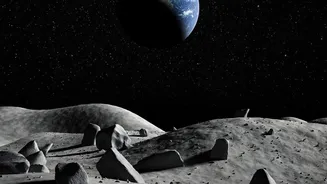
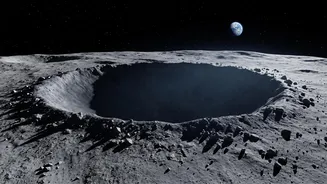
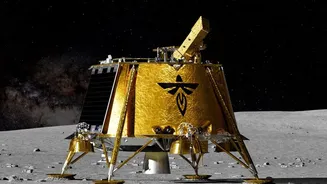
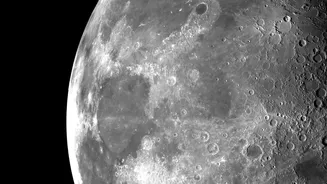
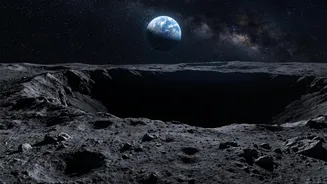
The key to this surprising possibility lies in geography. Near the Moon’s south pole, where India’s Chandrayaan-3 successfully landed, the Sun hangs perpetually low on the horizon. Because of this low-angle sunlight, the rims of craters and even small
ridges can cast long, permanent shadows. These areas, known as Permanently Shadowed Regions or PSRs, never see direct sunlight. As a result, they are among the coldest places in our solar system, with temperatures plunging low enough to preserve water ice for billions of years. For decades, scientists have been excited about these PSRs as a potential source of water for future lunar bases. Now, it seems these cosmic freezers might preserve more than just ice.
Earth's Toughest Hitchhikers
A new study published in the journal Science Advances has challenged the long-held assumption that the lunar surface is a perfect steriliser. A team of scientists led by researchers at NASA’s Goddard Space Flight Center ran sophisticated simulations to model the conditions at several potential landing sites for the upcoming Artemis missions near the lunar south pole. They then compared these environmental maps with the known survival limits of five common microbes that are frequent, unavoidable stowaways on spacecraft and astronauts. These weren't necessarily 'extremophiles' adapted to harsh conditions, but common organisms like the fungus Aspergillus niger—a type of black mould found in bathrooms—and bacteria such as Bacillus subtilis.
The Science of Survival
The results of the simulation were revealing. While the Moon's equatorial regions are blasted with enough heat and ultraviolet (UV) radiation to kill any microbe quickly, the polar regions are different. The models showed that the primary threat to microbial life in these cold areas is UV radiation, not temperature. The shadows cast by the lunar landscape provide a powerful shield. In these shaded niches, some microbes could potentially survive for weeks or even months. The study found that the fungus Aspergillus niger was the most resilient, with its dark pigments and thick cell walls offering protection. It's crucial to note this is about survival, not thriving. The microbes would enter a dormant, non-growing state called cryptobiosis, waiting for conditions that will never arrive on the Moon's surface. They wouldn't be forming colonies, but their mere presence as dormant cells is a game-changer.
Implications for Future Missions
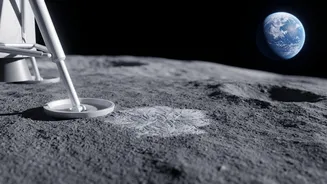
The findings have profound implications for planetary protection. As humanity prepares to establish a long-term presence on the Moon, we risk contaminating it with our own biological baggage. Every astronaut carries millions of microbes, and spacecraft are never perfectly sterile. The research showed that survivable niches could be as small as an astronaut's boot print or a rover's wheel track, creating tiny, shadowed shelters where microbes could persist. This complicates the search for pristine lunar materials that could tell us about the origins of our solar system. If scientists find organic molecules in a polar crater, they will now have to wonder: was this here all along, or did we bring it with us? This has led to calls for stricter contamination controls for missions targeting these scientifically valuable regions, ensuring we don't inadvertently erase the very history we are trying to read.