






A Time Capsule from the Bronze Age
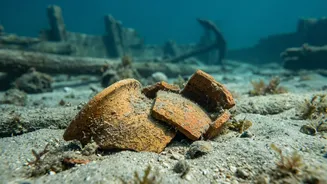
Near Kekova Island in southern Turkey, resting nearly 100 feet underwater, lies not a ship, but the ghost of one. What researchers found was a collection of over 30 ceramic pots, known as amphorae, and three large stone anchors scattered on the seabed.
The ship itself, a modest trading vessel estimated to be about 10 metres long, disintegrated thousands of years ago. Yet, its cargo remains a perfectly preserved time capsule from up to 4,700 years ago—around the same time the first great pyramids were being built in Egypt. Expedition leader Hakan Öniz described it as a unique glimpse into the past, allowing modern hands to be the first to touch these objects in nearly five millennia.
More Than Just Clay Pots
To the untrained eye, the amphorae might look like simple containers. To an archaeologist, they are history's fingerprints. Fired clay is incredibly durable, surviving for millennia even when wood, fabric, and metal corrode away. More importantly, the styles of pottery change over time, much like fashion or car designs. Specific shapes, handle styles, colours, and decorative markings are unique to certain cultures and periods. This allows archaeologists to create a reliable timeline. When a particular style of pottery is found, it can help date the entire site where it was discovered. The Kekova shipwreck’s cargo contained amphorae with a distinct shape—two handles, a flat base, and a central ridge—that provides a crucial clue to its age.
The Science of Ceramic Fingerprints
Because the ship's timbers had vanished, scientists could not use radiocarbon dating on the vessel itself. Instead, they turned to the pottery. The dating method relies on a principle called typology, or cross-comparison. Archaeologists compared the shape and decoration of the Kekova pots to other ceramics unearthed at well-dated land sites across the Middle East and Egypt. The style of the amphorae from the wreck perfectly matched examples known to be between 4,400 and 4,700 years old. This process, known as relative dating, provides a confident age bracket for when the ship was in use. It’s a powerful tool that turns everyday objects into precise chronological markers.
Uncovering Ancient Trade Routes
The pottery does more than just provide a date; it tells a story of ancient commerce. Analysis of the clay used to make the amphorae suggests they were produced in workshops in the Jordan Valley, along the modern-day border of Jordan and Israel. Finding these pots in a shipwreck off the Turkish coast, with similar examples having been found in Egypt and Crete, reveals a surprisingly sophisticated network of sea trade connecting different cultures across the eastern Mediterranean. The ship was likely carrying valuable goods like olive oil or wine when it sank, possibly on its way to Crete or even the legendary city of Troy. Some of the jars remarkably still contain a glossy residue, which scientists are now analysing to confirm their contents.
Rewriting Maritime History
The discovery near Kekova could make it the oldest known shipwreck in the world, potentially predating the previous record-holder found off Dokos, Greece. Each wreck site provides a snapshot of a specific moment in time, preserved in its historical context. This find is especially important because it pushes back the timeline for organised maritime trade in the Mediterranean. It demonstrates that nearly 5,000 years ago, sailors were undertaking long and dangerous voyages, transporting goods between distant regions. The humble pottery left behind is the key that unlocks this deeper understanding of our shared past, revealing the economic and cultural connections that shaped the ancient world.