






A Commanding Market Share
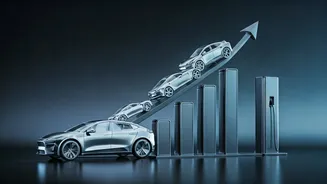
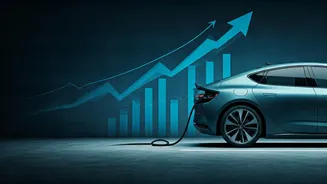
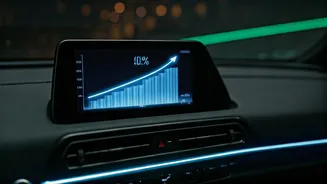
The numbers paint a clear picture of Tata's dominance. In a record-breaking June 2026, where India's electric passenger vehicle (e-PV) sales crossed 30,000 units for the first time, Tata Motors sold over 12,000 of them. This gave the company a formidable
38% market share for the month. This wasn't a one-off event; the company has consistently held the top spot, selling over 10,000 EVs for two consecutive months and establishing a significant gap between itself and its nearest rivals. For the first quarter of the fiscal year 2027 (April-June 2026), Tata registered over 32,000 EVs, more than doubling its performance from the previous year.
The First-Mover Advantage
Much of Tata's current success is built on a strategic head start. The company invested heavily in electric mobility before many of its competitors, launching models like the Nexon EV and Tigor EV when the market was still nascent. This allowed Tata to build brand recognition and capture a large portion of the early adopters. According to company leadership, the Indian EV market has now moved beyond the 'push' phase of convincing early adopters and into a 'pull' phase where mainstream consumer demand is driving growth. Having an established and trusted portfolio gives Tata a powerful advantage in this new, demand-driven environment.
A Multi-Pronged Product Strategy
Tata's success isn't just about being first; it's about having the right products at the right price. The portfolio is strategically diverse, catering to different segments of the market. The Nexon EV continues to be a volume driver, while the more accessible Tiago EV and Punch EV have successfully attracted a large number of first-time EV buyers. Recent launches like the Harrier EV and the highly anticipated Sierra EV, which was unveiled at the end of June 2026, signal a move into more premium and aspirational segments. This strategy of covering multiple price points, from affordable hatchbacks to lifestyle SUVs, ensures Tata has an offering for a wide spectrum of Indian consumers.
Building an Entire Ecosystem
Selling a car is only one part of the equation. Tata has understood that for EVs to succeed, a supportive ecosystem is crucial. Through its sister company, Tata Power, it has been instrumental in building out India's charging infrastructure. This vertical integration provides a significant competitive advantage, as it helps alleviate one of the biggest concerns for potential EV buyers: range anxiety. The company's focus isn't just on expanding its car lineup but also on improving battery technology to offer longer ranges and faster charging times, aiming to have ten distinct EV models in its portfolio by the fiscal year 2031.
The Challengers Are Gathering
Despite its strong position, Tata cannot afford to be complacent. The competition is intensifying rapidly. Mahindra & Mahindra has emerged as a strong number two, hitting its own record sales of over 7,600 e-SUVs in June 2026 and securing a 24% market share. MG Motor India holds a firm third place, while new entrants like VinFast and established players like Maruti Suzuki and BYD are also posting their highest-ever monthly sales, signaling a more crowded and competitive market ahead. Mahindra, in particular, is closing the gap with a strong lineup of electric SUVs that directly challenge Tata's offerings.