





Why Your City's Timings Aren't Enough
An eclipse is not like a national holiday; it doesn’t happen at the same time for everyone. The path of an eclipse, particularly a solar eclipse, traces a narrow band across the Earth. This means timings can differ by several minutes even between cities
in the same state. A generic newspaper timing for 'India' is almost always inaccurate for your specific neighbourhood. The key to a successful viewing experience is getting hyperlocal information, which tells you not just the date, but the precise start time, moment of maximum eclipse, and end time for your GPS coordinates.
Top Websites for Precision Tracking
For the most reliable and detailed information, turn to specialised astronomy websites. TimeandDate.com is a global favourite for a reason. Its interactive eclipse maps allow you to click on your exact location to get a customised schedule, including an animation of what the eclipse will look like from your perspective. Another essential resource is NASA's official eclipse website. It provides authoritative data, maps, and tables for all upcoming eclipses, helping you understand the global path and visibility. These sites use complex calculations to give you timings down to the second, ensuring you are perfectly prepared.
Essential Mobile Apps for Stargazers
Your smartphone is a powerful tool for eclipse hunting. For audiences in India, the free astronomy app 'Orbit' is an excellent starting point, as it is designed with local context in mind and can provide timings for eclipses, planetary positions, and more, all calculated for your location. Other globally recognised apps include SkySafari and Stellarium Mobile, which offer comprehensive sky charts and can simulate celestial events like eclipses. Many apps like 'Eclipse Guide' and 'Totality' use your phone's GPS to give you instant, accurate schedules and visualisations, making them perfect for on-the-go planning.
Decoding Eclipse Jargon
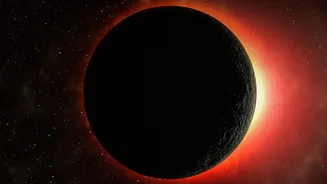
When you look up timings, you'll encounter specific terms. Understanding them is key to knowing what you'll see. A 'Partial Eclipse' is when the Moon only covers a part of the Sun. A 'Total Solar Eclipse' is when the Moon completely blocks the Sun, revealing its ethereal corona. An 'Annular Solar Eclipse' occurs when the Moon is farther away and appears smaller, leaving a 'ring of fire' around its edge. For lunar eclipses, you'll see 'Penumbral' (a subtle dimming), 'Partial' (part of the Moon enters Earth's dark shadow), and 'Total' (the entire Moon turns a reddish hue, often called a 'Blood Moon'). Knowing these helps you set the right expectations for the celestial show.
Don't Forget Local Experts
Beyond digital tools, your local community is a fantastic resource. Planetariums, such as the Nehru Planetarium in various cities, and local astronomy clubs often host public viewing events. They publish city-specific timings and provide expert guidance. Organisations like the Astronomical Society of India may also share resources and information for significant events. For example, India is set to witness a Total Lunar Eclipse on March 3, 2026, and a significant Partial Solar Eclipse on August 2, 2027. Local clubs will be invaluable for these events, offering safe viewing equipment and a chance to share the experience with fellow enthusiasts.