

The Sobering Statistics
As the Southern Hemisphere’s winter drew to a close in September, scientists at the National Snow and Ice Data Center (NSIDC) confirmed the continent's sea ice likely reached its maximum extent for 2026 on September 14. The peak coverage was measured
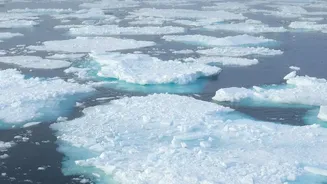
at 17.59 million square kilometres. While that number sounds immense, it is a staggering one million square kilometres below the long-term average for the winter maximum. To put that missing ice into perspective, it is an area roughly twice the size of Spain that has failed to form. This makes 2026 the third-lowest winter sea ice peak on record since satellite monitoring began in 1979.
A Pattern of Decline
A single bad year could be dismissed as an anomaly. However, this is not a one-off event. The four lowest winter sea ice maximums in Antarctica have all occurred in the last four years. This pattern suggests a fundamental shift may be underway in the Antarctic climate system, which for decades behaved very differently from its northern counterpart. While Arctic sea ice has been in a steep, well-documented decline for years, Antarctic sea ice was characterized by high variability and even saw a slight increasing trend until around 2015. Since 2016, however, the trend has sharply reversed, with record lows being set in both summer and winter, alarming scientists who now see it as a "now problem," not a future one.
Why Is This Happening?
Pinpointing a single cause for the sudden drop is complex. Unlike the Arctic, which is a frozen ocean surrounded by land, Antarctica is a frozen continent surrounded by ocean. This makes its sea ice more susceptible to changes in wind and ocean currents. Scientists believe a combination of factors is at play. Warmer ocean water, potentially driven from other parts of the globe, may be mixing with the cold surface layer, making it more difficult for ice to form. Changes in atmospheric circulation, including the influence of weather patterns like El Niño, can alter the powerful winds that whip around the continent, either pushing ice around or churning up warmer, deeper water that melts ice from below.
Global Consequences of a Distant Melt
What happens in Antarctica does not stay in Antarctica. The vast, white sheet of sea ice acts as a planetary sunshield, reflecting the sun's energy back into space—a phenomenon known as the albedo effect. When that ice is replaced by dark ocean water, more of the sun's heat is absorbed, leading to a feedback loop of further warming and melting. While melting sea ice doesn't directly raise sea levels because it's already floating, it does have a critical indirect effect. The sea ice acts as a protective buffer for the massive land-based ice shelves that fringe the continent. Without it, these ice shelves are more exposed to ocean waves and warmer temperatures, which can accelerate their melting and break-up. It is the melting of this land ice that contributes directly to global sea level rise, threatening coastal communities worldwide.