




A Junkyard Above Our Heads
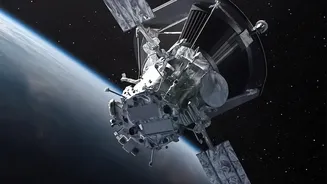
For decades, the problem of space debris was largely theoretical. It refers to any piece of man-made machinery left in orbit that is no longer functional. This includes everything from defunct satellites and spent rocket stages to tiny paint flecks and frozen
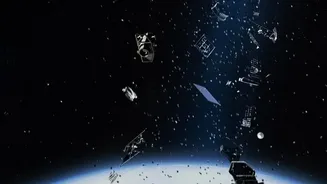
coolant. While it may sound harmless, each piece is travelling at enormous speeds—up to 28,000 kilometres per hour. There are over 29,000 tracked objects in orbit, but the real number, including smaller, untraceable fragments, is estimated to be in the millions. A collision with even a small piece of this junk can be catastrophic, destroying a multi-million dollar satellite and creating thousands of new pieces of debris in the process.
The Mega-Constellation Effect
The urgency has intensified dramatically with the rise of satellite 'mega-constellations'. Companies like SpaceX's Starlink and OneWeb are deploying thousands of small satellites into low-Earth orbit (LEO) to provide global internet coverage. While this revolutionises connectivity, it exponentially increases orbital traffic. The number of operational satellites has surged by over 360% in the last five years alone. This rapid densification of LEO heightens the risk of collisions and has turned the theoretical 'Kessler Syndrome'—a cascading chain reaction of collisions that could render entire orbits unusable—into a tangible threat. This growing danger is the primary driver behind the sudden commercial need for a cleanup crew.
Enter the Space Janitors
What was once a problem for government space agencies has now become a significant business opportunity. The space debris monitoring and removal market was valued at over USD 1.2 billion in 2026 and is projected to grow steadily. A new wave of startups and established aerospace giants are positioning themselves as 'space janitors', offering services to satellite operators, insurance companies, and governments who now have a vested financial interest in keeping orbits clear. Companies like the Japan-based Astroscale and Switzerland's ClearSpace are pioneering this field, developing missions to demonstrate the feasibility of actively removing debris. Their customers are operators looking to protect their assets and comply with emerging regulations for sustainable space use.
Cosmic Nets and Robotic Arms
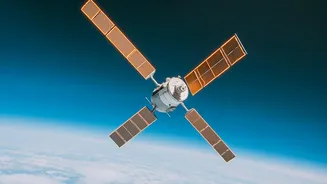
Removing a piece of tumbling debris moving faster than a bullet is a monumental technical challenge. Companies are developing a range of innovative solutions that sound like something from a science fiction film. These active debris removal (ADR) technologies include robotic arms to grab and manoeuvre defunct satellites, large nets to capture multiple fragments, powerful magnets, and even harpoons to spear larger objects. The European Space Agency (ESA) has commissioned ClearSpace for the world's first active debris removal mission, which will use a four-armed capture system to remove an old ESA payload adapter from orbit. Astroscale has also conducted successful missions demonstrating the ability to approach and inspect debris up close. These missions are crucial for proving that these technologies can work in the harsh and unforgiving environment of space.
The Road Ahead
Despite the progress, the industry faces hurdles. The cost is currently immense, with a single removal mission potentially costing around USD 100 million. Furthermore, complex legal and regulatory questions remain, particularly around the ownership of debris and liability if a removal mission goes wrong. International bodies and national governments are working to establish clearer guidelines, but a universally accepted framework is still in its infancy. The success of this new market will depend not just on technological innovation to bring costs down, but also on international cooperation to create a sustainable and legally clear framework for operating in orbit.