





What is the New Scheme?
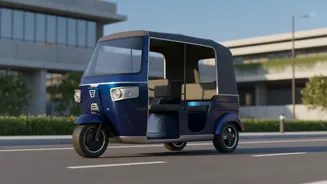
The Telangana government has approved the 'Telangana Auto Rickshaw Electric Conversion Scheme 2026', a major initiative with a budget of ₹200 crore. The core objective is to convert or replace 18,766 existing petrol and diesel-powered auto-rickshaws operating
in Hyderabad's Core Urban Region Economy (CURE) area into electric vehicles (EVs). This policy is a key part of the state's 'Telangana Rising Vision-2047', which aims to make Hyderabad a sustainable and eco-friendly city by reducing pollution and drivers' fuel expenses. The scheme targets the city's entire fleet of eligible internal combustion engine (ICE) autos, which includes 11,254 diesel and 7,512 petrol vehicles.
How Does the Funding Work?
Auto-rickshaw drivers have two distinct options, both supported by significant financial aid. The government is offering a subsidy of up to ₹1.5 lakh per vehicle. Drivers can either use this amount to retrofit their existing auto with an approved electric kit or use it as a fixed subsidy to purchase a brand-new electric auto after surrendering their old one. For retrofitting, the government will cover the actual cost of the kit and installation up to the ₹1.5 lakh limit. For new purchases, the empanelled dealer will deduct the ₹1.5 lakh subsidy directly from the vehicle's on-road price, making the switch more affordable upfront. This financial assistance is available to all eligible auto owners, regardless of their social category.
Choice and Flexibility for Drivers
The scheme is designed to offer flexibility. Drivers who choose to retrofit their vehicles can select an AIS-123 approved electric kit, ensuring safety and performance standards. They can also choose between a fixed battery system or a more flexible swappable battery kit, which can reduce waiting times for charging. These conversions will be handled by government-empanelled vendors to maintain quality control. For those preferring a completely new vehicle, the option to surrender their old ICE auto and buy a factory-manufactured, type-approved electric three-wheeler provides a path to owning the latest technology. This choice empowers drivers to select the best option for their business needs and financial situation.
The Bigger Picture: Cleaner Air and Economic Relief
This initiative is about more than just new vehicles; it's a strategic push for public health and economic stability. Transport Minister Ponnam Prabhakar stated that the scheme aims to steer Hyderabad's urban transport toward net-zero carbon emissions. By replacing thousands of petrol and diesel engines, the government hopes to significantly improve air quality in the congested urban core. For drivers, the economic benefits are just as crucial. With rising fuel costs, switching to electricity is expected to lower daily operational expenses, putting more money back into their pockets. Auto driver unions have reportedly welcomed the decision, seeing it as a way to make their operations more economical while contributing to a cleaner city.
Implementation and Oversight
To ensure the ₹200 crore fund is used effectively and transparently, the government has proposed a three-tier monitoring system. This structure includes a State-Level Steering Committee, a Scheme Implementation Committee under the Transport Commissioner, and District-Level Sanction Committees headed by District Collectors. The funding itself is being pooled from various welfare departments, with the SC, ST, BC, and Minority Welfare departments each contributing ₹50 crore. This structured approach, combined with the state's broader EV policy—which already provides 100% road tax and registration fee exemptions for new EVs—is designed to create a robust ecosystem that encourages a swift transition to electric mobility.