









A Promising Economic Outlook
Several financial institutions and economists are pointing towards a strengthening of the Indian economy in the latter half of the year. Projections from firms like Deloitte and Goldman Sachs suggest GDP growth for the fiscal year will be in the healthy
range of 6.5% to 6.8%. This optimism is built on expectations of a boost from festive season demand, potentially easing monetary policy, and more stable global economic conditions. After navigating geopolitical tensions and commodity price volatility earlier in the year, resilient domestic demand has kept the economic engine humming, with the RBI forecasting growth at 6.6% for the fiscal year.
The Monsoon-Shaped Cloud on the Horizon
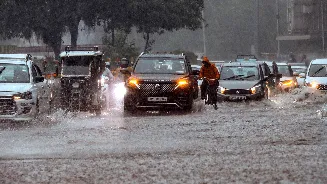
The primary concern casting a shadow over this bright picture is the performance of the southwest monsoon. The India Meteorological Department (IMD) has predicted a below-normal monsoon for 2026, a forecast made more concerning by the potential strengthening of El Niño conditions. As of late June, the national rainfall deficit was already significant, raising alarm bells among policymakers. The RBI Governor has explicitly flagged a weak monsoon as one of the biggest risks to India’s growth and inflation outlook, a sentiment echoed by many economists. This isn't just a weather report; it's a critical economic indicator for a nation where the monsoon delivers about 70% of the annual rainfall.
The Direct Hit on Agriculture and Inflation
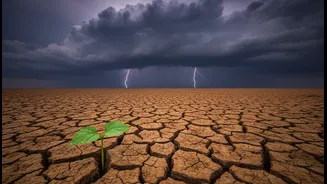
The most immediate and obvious impact of a poor monsoon is on agriculture, a sector that employs a vast portion of India's rural workforce. With nearly half of the country's farmland still dependent on rain-fed irrigation, inconsistent or deficient rainfall directly threatens crop yields. An erratic monsoon has already led to delays in the planting of crucial Kharif crops, with total acreage down significantly compared to the previous year. This directly translates to lower farm incomes, which in turn dampens rural demand for goods and services. Furthermore, lower agricultural output puts direct upward pressure on food prices. With food items having a substantial weight in the Consumer Price Index (CPI), a spike in their cost can quickly drive up headline inflation, complicating the RBI's efforts to maintain price stability.
Ripple Effects Beyond the Farm
The economic fallout from a weak monsoon extends far beyond the agricultural sector. Reduced rural incomes mean lower sales for companies selling everything from tractors and two-wheelers to fast-moving consumer goods. When farmers have less money to spend, demand falters across the board. The energy sector is also vulnerable. A poor monsoon leads to lower water levels in reservoirs, which curtails hydropower generation, a key component of India's energy mix. This increases reliance on more expensive thermal power, potentially pushing up energy costs for industries and households alike. Extreme weather events like heatwaves also disrupt other sectors like construction and transport by reducing productivity and shortening viable working hours.
A Puzzle for Policymakers
This weather-induced uncertainty presents a complex challenge for both the government and the Reserve Bank of India. While fiscal measures and structural reforms have made the economy more resilient to monsoon fluctuations than in the past, the risk remains substantial. For the RBI, the dilemma is particularly acute. Monetary policy is designed to manage demand-side pressures, but it has little power over supply-side shocks caused by crop failures. An inflation spike driven by food prices could force the central bank to maintain a hawkish stance or even consider rate hikes, which could, in turn, slow down the very economic recovery everyone is counting on. Policymakers are in a "wait and watch" mode, closely monitoring rainfall distribution and its impact on sowing and prices before making any decisive moves.