








The Quiet Revolution's Missing Beat
For all their impressive technology and instant torque, electric cars have a reputation for being a bit… sterile. The serene, whisper-quiet ride is a luxury for some, but for many driving enthusiasts, it’s a dealbreaker. The roar of an engine, the satisfying
jolt of a gear change, and the visceral feedback that connects driver to machine are all fundamental parts of the thrill of driving. This sensory feedback loop is largely absent in a typical single-gear EV. Recognizing this emotional gap, automakers are now exploring ways to bring the soul of a combustion car into an electric future. Hyundai is at the forefront of this movement, betting that the solution isn't just about going faster, but about feeling more.
Introducing a Virtual Orchestra
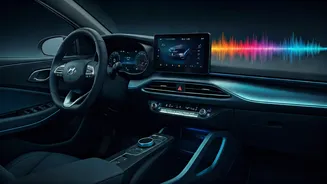
Hyundai’s answer comes in the form of two key technologies showcased in its high-performance Ioniq 5 N: N e-Shift and N Active Sound+. Together, they create a convincing illusion of driving a high-performance petrol car. N e-Shift simulates the experience of an eight-speed dual-clutch transmission (DCT). Using the paddle shifters behind the steering wheel, drivers feel a subtle kick as the car’s electric motors momentarily adjust torque, mimicking the sensation of a gear change. It even simulates hitting the rev limiter if you hold a 'gear' for too long. Paired with this is N Active Sound+, a sophisticated audio system that goes far beyond the legally required pedestrian warning hum. It uses a network of ten speakers—eight inside the cabin and two outside—to generate a rich, dynamic soundscape that responds to your driving.
More Than Just Fake Noise
This isn’t just a pre-recorded engine track playing on a loop. The system is deeply integrated with the vehicle’s controls. It analyses throttle position, speed, and the torque being delivered by the motors to create a sound that convincingly matches the action. Drivers can choose from several sound profiles. The 'Ignition' mode is designed to sound like one of Hyundai’s own 2.0-litre turbocharged petrol engines. For those wanting something more futuristic, 'Evolution' offers a high-tech electronic sound, while 'Supersonic' borrows audio cues from a fighter jet, complete with sonic booms on upshifts. Crucially, Hyundai has made these features entirely optional. With the press of a button, the car can revert to its silent EV self, offering drivers the best of both worlds.
A Bridge to the Electric Future
So, why go to all this trouble? Hyundai’s strategy is to win over the hearts and minds of traditional 'petrolheads' who remain skeptical of the electric transition. By recreating the sensory drama of an internal combustion engine, the company hopes to make high-performance EVs more appealing and familiar. It’s a clever tactic to bridge the gap between the analogue past and the digital future. This isn't just a gimmick, either; it's a growing industry trend. Dodge has developed a 'Fratzonic Chambered Exhaust' for its electric Charger to mimic a V8 rumble, while BMW famously hired composer Hans Zimmer to create the sound for its electric models. Hyundai’s execution has been widely praised by critics as one of the most convincing attempts yet.
What's Next for the Indian Market?
While the standard Hyundai Ioniq 5 is available in India—with an updated model launched in April 2026—the high-performance Ioniq 5 N featuring this technology has not yet been confirmed for the market. However, Hyundai has indicated that these features won’t remain exclusive to its top-tier N models. The company plans to offer versions of the simulated shifting and sound systems on other powerful EVs in its lineup, suggesting this could become a signature feature for the brand. Furthermore, Hyundai's head of R&D recently confirmed that the next generation of this technology will be even more realistic, with plans to simulate idle vibrations and exhaust backfires. This commitment shows that the quest to give EVs more 'soul' is only just beginning.