

A Cosmic Collision Course
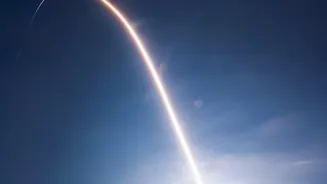
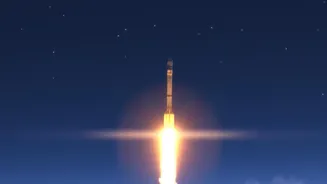
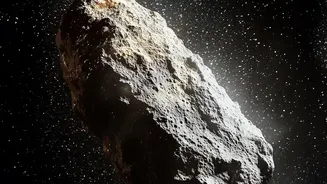
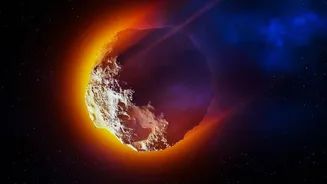
On August 5, 2026, a discarded upper stage of a SpaceX Falcon 9 rocket ended its journey in a dramatic, silent collision with the Moon. The four-ton piece of space hardware, which had been drifting in an unstable orbit after a launch in January 2025,
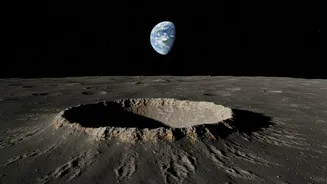
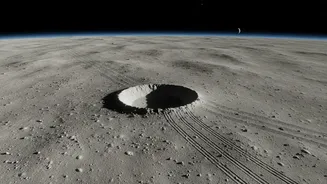
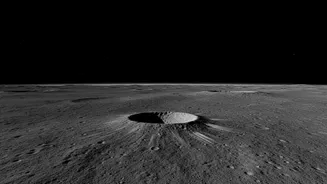
crashed on the far side of the Moon near a feature known as the Einstein Crater. While the impact itself was not visible from Earth, astronomers had tracked the object for months, predicting its eventual demise. The collision, happening at a blistering speed of about 8,700 km/h, was expected to carve out a crater nearly 30 meters wide. This event was not the first of its kind—a Chinese rocket stage famously hit the Moon in 2022—but it served as a powerful, timely reminder of a new reality. As lunar exploration accelerates, our nearest celestial neighbor is accumulating a small but growing collection of man-made debris.
The Detective Work of Finding a Crater
Finding a new, relatively small crater on a surface already pockmarked with millions is a monumental task. The process is a blend of predictive modeling and patient observation. First, astronomers track the object, calculating its trajectory to forecast a likely impact zone. This is a complex calculation, as the object's path can be influenced by gravitational forces and even gentle pressure from sunlight. After the predicted impact, the real search begins. Scientists turn to orbiters like NASA’s Lunar Reconnaissance Orbiter (LRO), a spacecraft that has been mapping the Moon in extraordinary detail since 2009. The LRO team then meticulously compares new images of the predicted impact zone with older photos of the same area. They look for a tell-tale new splotch or hole that wasn't there before, a technique that has successfully identified the crash sites of multiple spacecraft, including the recent SpaceX stage and the Chinese booster from 2022.
An Unexpected Scientific Opportunity
While space debris is a growing concern, these impacts offer an unplanned scientific gift. Each collision acts as a powerful experiment, excavating lunar material from beneath the surface. The resulting plume of dust and gas, though fleeting, can be analyzed by telescopes for its chemical composition. Following the recent SpaceX impact, the Very Large Telescope in Chile detected sodium and lithium gas in the plume, giving scientists clues about the surface material in that specific location. Furthermore, the crater itself exposes fresh lunar soil, or regolith, that hasn't been exposed to the harsh space environment for billions of years. Studying the size and shape of the crater also helps scientists understand impact physics. The 2022 Chinese rocket impact, for example, created a bizarre double crater, suggesting the spent rocket had an unusual weight distribution, a mystery that still intrigues scientists.
A Future of Lunar Traffic Control
With over 100 lunar missions planned in the next decade by various countries and private companies, the space around the Moon is set to become much busier. This raises the stakes for tracking not just active spacecraft but also the debris left behind. Experts warn that without better monitoring and internationally agreed-upon rules for disposal, the risk of collisions and contamination of pristine lunar sites will increase. There is a growing call to establish a form of lunar space traffic management, similar to the Space Surveillance Network that tracks objects orbiting Earth. Some scientists are even looking to the future possibility of a lunar seismology network, which could detect impacts in real-time from the vibrations they cause, providing instant data on both natural meteoroid strikes and artificial collisions. As humanity establishes a more permanent presence on the Moon, understanding and managing these impacts will be crucial for safety and science alike.