



The New orbital Gold Rush
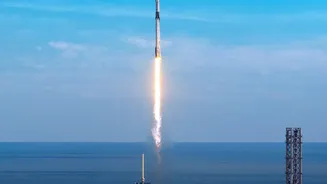
Just a decade ago, the idea of tens of thousands of active satellites circling the Earth felt like science fiction. Today, it’s a commercial reality. The primary drivers of this population explosion are 'megaconstellations'—vast networks of satellites designed
to provide services like global internet access. Companies like SpaceX with its Starlink network, and Amazon with its upcoming Project Kuiper, are launching satellites at an unprecedented rate. In 2016, there were approximately 1,400 active satellites in orbit. By 2026, that number has skyrocketed, with estimates placing the count of operational satellites well over 10,000, and plans for tens of thousands more in the coming years. This rapid expansion, while innovative, has fundamentally changed the nature of space operations, turning a vast frontier into a congested environment where the risk of collision is a daily concern.
A Sky Full of Close Calls
With more satellites comes a higher probability of them getting too close for comfort. A collision-avoidance maneuver is essentially a satellite using its onboard thrusters to slightly alter its course to avoid hitting another satellite or a piece of space debris. According to space agencies like the European Space Agency (ESA), the number of these maneuvers has increased dramatically. A decade ago, a typical satellite operator might have performed a handful of such maneuvers a year. Now, operators of large constellations report dealing with thousands of conjunction alerts—warnings of a potential close pass—every single day. For constellations like Starlink, which operates thousands of satellites, automated systems perform multiple avoidance maneuvers daily. This isn't a rare emergency procedure anymore; it's a routine part of keeping the orbital environment safe and functional. The sheer volume of alerts and necessary course corrections represents a significant operational burden and a clear indicator of rising risk.
The Threat of a Chain Reaction
A single collision in orbit might not sound catastrophic, but the consequences can be exponential. When two satellites collide at orbital velocities—often exceeding 28,000 kilometres per hour—they don't just stop working. They shatter into thousands of pieces of new debris. This debris then becomes a new set of unguided projectiles, each capable of causing further collisions. This cascading effect is known as the Kessler Syndrome, a theoretical scenario where the density of debris in orbit becomes so high that it renders certain altitudes unusable for generations. While we are not there yet, every collision pushes us closer to that tipping point. Such an outcome would threaten not just future space missions but also the critical infrastructure we rely on daily, including GPS navigation, weather forecasting, financial transactions, and global communications.
Who is Directing Traffic?
One of the biggest challenges is that there is no central, global air traffic control for space. Tracking and warning services, primarily provided by military entities like the U.S. Space Force’s 18th Space Defense Squadron, offer data on potential conjunctions. However, the responsibility to act on these warnings falls on individual satellite operators. This decentralized system relies on operators to communicate with each other and coordinate their maneuvers, a process that can be slow and prone to error, especially when dealing with international or unresponsive operators. The current framework was designed for a far less crowded era. It is ill-equipped to handle the sheer scale and speed of modern megaconstellations, creating a pressing need for a more robust and unified system for space traffic management.
The Search for Solutions
Recognizing the growing danger, the space industry and government agencies are actively seeking solutions. The most immediate progress is being made in automation. Instead of relying on human operators to manually command every maneuver, companies are developing and deploying AI-driven systems that can analyze collision risks and execute avoidance maneuvers automatically. This is essential for managing constellations with thousands of satellites. Alongside technology, there is a strong push for international policy and regulatory standards. These discussions revolve around establishing clear 'rules of the road' for orbit, including agreements on data sharing, communication protocols, and best practices for satellite design and disposal to minimize debris. The goal is to create a collaborative framework that ensures the long-term sustainability of the orbital environment.