






Two Blocs, One Moon
The 21st-century lunar rush is coalescing around two major, competing factions. On one side is the United States-led Artemis Accords, a broad coalition of nations committed to a shared set of principles for peaceful and transparent space exploration.
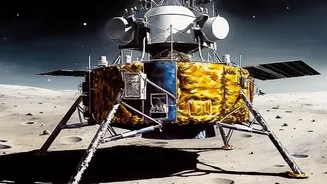
On the other is the China-Russia led International Lunar Research Station (ILRS), a parallel project to establish a permanent scientific base on the Moon, primarily attracting partners from the Global South. This division marks a new geopolitical era where alliances are not just Earth-bound but extend into the cosmos. Both groups are targeting the Moon's South Pole, a strategic region believed to hold water ice—a critical resource for generating breathable air, drinkable water, and rocket fuel for future deep-space missions.
Inside the Artemis Accords
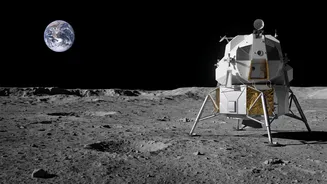
First signed in 2020, the Artemis Accords are a non-binding set of principles grounded in the 1967 Outer Space Treaty. They emphasize peaceful purposes, transparency, interoperability between different countries' systems, providing emergency assistance to astronauts in distress, and openly sharing scientific data. As of late 2026, the pact has attracted over 70 signatories, including established space powers like Japan, Canada, and the European Space Agency nations, as well as emerging ones such as the UAE, Brazil, and Nigeria. India became a key signatory in 2023, a move that signals its ambition to be a major player in global space governance. The accords underpin NASA's Artemis program, which aims to land astronauts on the Moon by 2028 and establish a sustainable presence.
The International Lunar Research Station
Spearheaded by China and Russia, the ILRS is an ambitious plan to construct a permanent robotic—and eventually crewed—base near the lunar south pole. Construction is envisioned in phases, with a basic station operational by 2035. The project has gathered its own coalition of partners, including Pakistan, South Africa, Venezuela, Egypt, and others. Unlike the Western-centric Artemis group, the ILRS builds on China's diplomatic efforts across Asia, Africa, and Latin America. Proponents frame it as an open and inclusive alternative, though details on its governing principles remain less public than those of the Artemis Accords. The ILRS is a clear demonstration of China's intent to become a leading space power, with plans to land its own astronauts on the Moon by 2030.
India's Strategic Balancing Act
India finds itself in a unique and powerful position. By signing the Artemis Accords, it has aligned with the U.S.-led framework for lunar governance, gaining access to collaborative opportunities and advanced technologies. However, ISRO continues to forge its own path. The stunning success of Chandrayaan-3 cemented India's status as the fourth nation to achieve a lunar soft landing. Now, it is developing ambitious follow-up missions, including a collaboration with Japan's agency, JAXA, for the LUPEX rover to investigate polar ice. Furthermore, the Chandrayaan-4 mission, planned for around 2028, aims to be one of the first to return samples from the Moon's south pole, a complex feat only a handful of nations have achieved. This allows India to maintain its strategic autonomy, contributing to international efforts while building sovereign capabilities.