



Amid renewed global interest in nuclear power, the International Atomic Energy Agency (IAEA) has been making headlines. But what has its chief, Rafael Mariano Grossi, actually predicted about the future of this complex energy source?
A Renaissance for Nuclear Energy?
For the sixth year
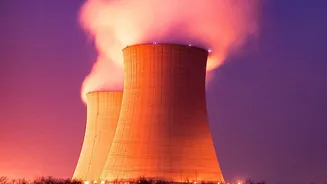
in a row, the IAEA has revised its projections for nuclear power upward, signaling a significant shift in the global energy debate. According to the agency's latest annual report, released in September 2026, global nuclear capacity could more than triple by the year 2060. IAEA Director General Rafael Mariano Grossi has been at the forefront of this conversation, highlighting a growing consensus that nuclear power is a crucial tool for countries seeking energy security and a transition away from fossil fuels. This renewed optimism marks a notable turnaround from the sentiment following the 2011 Fukushima accident, with projections now significantly higher than they were just a few years ago.
The Tale of Two Scenarios
The IAEA's predictions are not a single forecast but are presented as two main scenarios: a 'high case' and a 'low case'. The high case projection estimates that global nuclear capacity could soar from around 377 gigawatts (GWe) in 2025 to 1,284 GWe by 2060. This represents a roughly 3.4-times increase. The more conservative low case still projects significant growth, with capacity nearly doubling to 696 GWe in the same period. The difference between these two possible futures hinges on several factors, including government policies, investment levels, and the successful extension of lifetimes for existing reactors. As Grossi notes, achieving the high case is plausible but requires concerted international effort and enabling policies.
What's Driving the Growth?
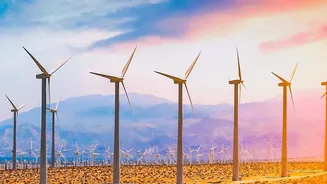
Several key drivers are behind this nuclear resurgence. A primary factor is the global push for decarbonization to combat climate change. Nuclear power offers a source of clean, 24/7 electricity that can complement variable renewables like wind and solar. Another major driver is energy security. Recent geopolitical events have prompted many nations to seek more reliable, domestic energy sources to reduce dependence on volatile international markets. More recently, Grossi has pointed to a new, powerful driver: the immense energy demands of artificial intelligence and data centers. Tech companies are increasingly looking to nuclear power for the reliable, carbon-free energy needed to power their operations.
The Rise of Small Modular Reactors (SMRs)
A key component of the IAEA's optimistic forecast is the anticipated role of Small Modular Reactors (SMRs). These smaller, factory-built reactors are seen as more flexible and affordable than traditional large-scale plants. In the IAEA's high-growth scenario, SMRs could account for as much as 28% of all new nuclear capacity added by 2060. This is a significant jump in confidence from previous reports, where SMRs were expected to play a much smaller role in the low-case scenario. Their potential to be deployed in remote locations or integrated into smaller grids makes them an attractive option for a wider range of countries, including those new to nuclear energy.
The India Connection
For India, these global trends are particularly relevant. The nation has an ambitious, long_term nuclear energy strategy, rooted in Homi J. Bhabha's three_stage program designed to ultimately utilize the country's vast thorium reserves. In early 2025, India announced its 'Nuclear Energy Mission for Viksit Bharat', with a goal of reaching $100$ GWe of nuclear capacity by $2047$. This aligns with the global push for energy security and net_zero goals. The IAEA's Director General has called India's approach 'logical, deliberate and serious'. Furthermore, India is actively exploring SMRs, with plans to partner with the private sector to deploy 'Bharat Small Reactors', reflecting the global trend toward smaller, more flexible nuclear technology.