



Our Galaxy’s Gentle Giant
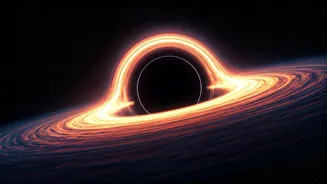
When astronomers look at the centers of other galaxies, they often see brilliant, violent displays of energy called active galactic nuclei, or quasars. These are powered by supermassive black holes ferociously consuming gas, dust, and stars, releasing
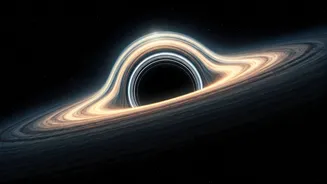
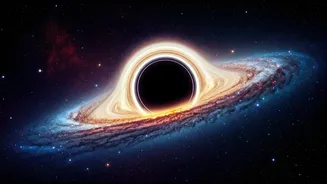
immense radiation in the process. By comparison, our own Sagittarius A (Sgr A) has long been considered remarkably peaceful. It is one of the dimmest supermassive black holes known, barely emitting any light and feeding so little that its diet has been compared to a single grain of rice over a million years. This quiet nature made it a fascinating but seemingly placid object, a gentle giant resting at the chaotic center of our galactic home. This perception was built on years of observation showing a consistent lack of the high-energy fireworks seen elsewhere in the cosmos, painting a picture of a black hole in a state of near-dormancy.
Echoes of a Violent Past
However, recent discoveries are revealing that this gentle giant has a rowdy history. Astronomers using new, high-precision instruments have found compelling evidence that Sgr A was not always so quiet. In early 2026, data from the XRISM space telescope showed that the black hole likely unleashed a dramatic flare sometime in the last few hundred to 1,000 years. Scientists figured this out by studying a “light echo.” A powerful burst of X-rays from the black hole shot out into space centuries ago, and astronomers have now detected that light as it reflects off a giant molecular cloud hundreds of light-years away. These echoes suggest that during this past outburst, Sgr A was at least a million times brighter than it is today, transforming it from a dim ember into a raging furnace. It’s a form of cosmic archaeology, allowing us to reconstruct the black hole’s past behavior long before we had telescopes to watch it directly.
A Persistent Cosmic Breeze
More recently, in June 2026, scientists announced another discovery that challenges the idea of a completely calm black hole. After a search that spanned 50 years, they found the first clear evidence of a cosmic “wind” blowing from Sgr A. Using data from the ALMA and Chandra observatories, astronomers identified a giant, cone-shaped cavity near the black hole. This void in the surrounding cold gas is believed to have been carved out by a hot, energetic wind flowing from Sgr A, which either swept the gas away or heated it up. While this outflow is described as a “gentle breeze” compared to the storms produced by more active black holes, its existence proves that Sgr A is continuously interacting with and shaping its environment, even in its current quiet state. It’s not a violent eruption, but a persistent influence that shows the giant is breathing, not sleeping.
Putting the Pieces Together
Together, these two lines of evidence—a violent past and a persistently active present—are painting a new, more dynamic portrait of our galaxy's central black hole. The ancient, powerful flares were likely caused by a significant feeding event, such as a star or a large asteroid wandering too close and being torn apart by the black hole’s immense gravity before being consumed. The resulting debris would have superheated and flared brilliantly before vanishing across the event horizon. The newly discovered wind, on the other hand, shows that even without such dramatic meals, the process of accreting small amounts of material is enough to generate a constant outflow. This means Sgr A exists in a complex state: it is mostly quiet now, but it is not dormant, and it holds the memory of a much more tempestuous youth.
Cosmic History, Not Current Danger
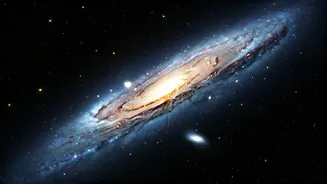
While talk of million-fold increases in brightness and cosmic winds might sound alarming, this is all happening at a very safe distance. Sgr A is located roughly 26,000 light-years from Earth, and its activity poses no threat to our planet or solar system. These discoveries are not a warning of impending doom, but rather a thrilling update to our understanding of the Milky Way’s evolution. By studying these echoes and winds, scientists can learn more about how supermassive black holes grow, how they influence star formation, and how they shape the galaxies they inhabit. We are essentially reading the history of our own galaxy, written in the movement of gas and the echoes of ancient light.