



The Viral Moment in Gurugram
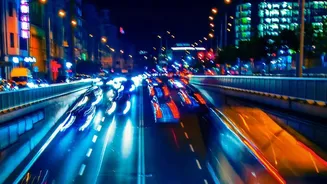
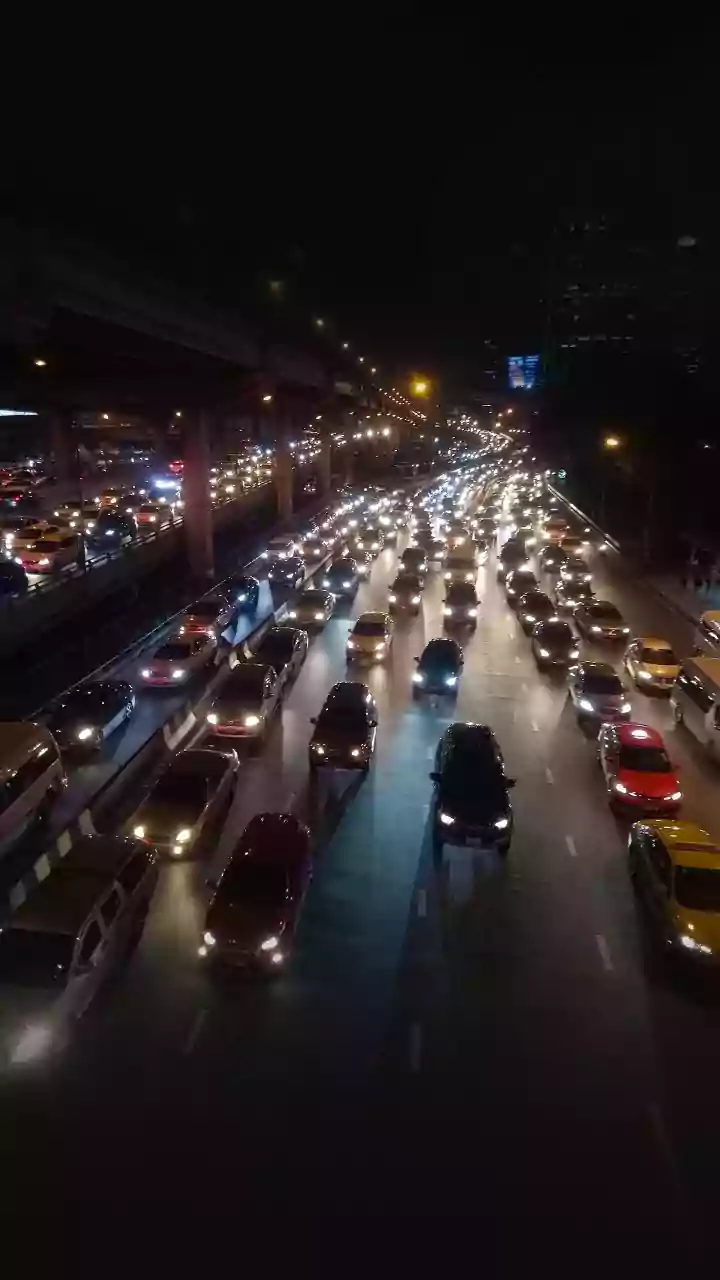
The scene is a familiar one for any Indian commuter: a dense, fluid river of traffic. In a widely circulated video, the large central screen of a Tesla Model Y shows its real-time interpretation of a street in Gurugram. The system’s visualisation flickers,
trying to track a dizzying array of cars, motorcycles, auto-rickshaws, and pedestrians all moving in close proximity. On social media, the reactions were swift and humorous, with users joking that the AI’s “brain” might melt down. While the clip is not technical evidence of a system failure, it serves as a powerful visual metaphor for the immense challenge that self-driving technology faces in India. It’s not just about the number of vehicles; it’s about a fundamentally different philosophy of road use that current technology, trained mostly on Western roads, is not yet equipped to handle.
Chaos or a Complex System?
To an outsider, or to a rules-based AI, Indian traffic can look like pure anarchy. In reality, it operates on a deeply ingrained, unwritten social code. Unlike in many Western countries where driving is governed by strict lane discipline and right-of-way, Indian roads function through a system of constant negotiation and improvisation. Human drivers use a nuanced language of horn honks, headlight flashes, and subtle hand gestures to communicate intent. A short beep can mean “I’m here,” while a flash of the lights might signal an intention to overtake. This organic, flowing system prioritises awareness and adaptability over rigid rules. An autonomous vehicle programmed to expect strict adherence to lane markings and traffic signals is immediately at a disadvantage in an environment where lanes are mere suggestions and traffic flow is determined by a collective, moment-to-moment understanding.
The Vehicle Menagerie
Another major hurdle for AI is the sheer diversity of vehicles sharing the same space. Indian roads are a heterogeneous mix of cars, buses, trucks, motorcycles, scooters, auto-rickshaws, bicycles, and sometimes even animal-drawn carts. Each moves at a different speed and follows its own logic. An auto-rickshaw can make a sudden U-turn, a scooter can weave through the smallest of gaps, and a bus might stop abruptly in the middle of a lane. Tesla’s Full Self-Driving (FSD) system, which relies on cameras and neural networks, must be trained to not only identify these varied vehicle types but also predict their often erratic behaviour. Without extensive local data, systems trained on more uniform traffic patterns in North America or Europe can struggle to classify and react appropriately to uniquely Indian vehicles like auto-rickshaws.
Infrastructure and Human Variables
Beyond the traffic itself, the physical infrastructure presents its own set of challenges. Faded or non-existent lane markings, inconsistent road signs, sudden potholes, and frequent construction make it difficult for vision-based systems to navigate reliably. Furthermore, the road is not just for vehicles. Pedestrians often walk on the road, vendors operate on the shoulder, and stray animals are a common sight. A human driver intuitively slows down for a cow or anticipates a pedestrian about to jaywalk, but these are complex 'edge cases' for an AI that expects a clear, predictable environment. These elements are not bugs in the system; they are features of the Indian road ecosystem that any successful autonomous technology must learn to master.