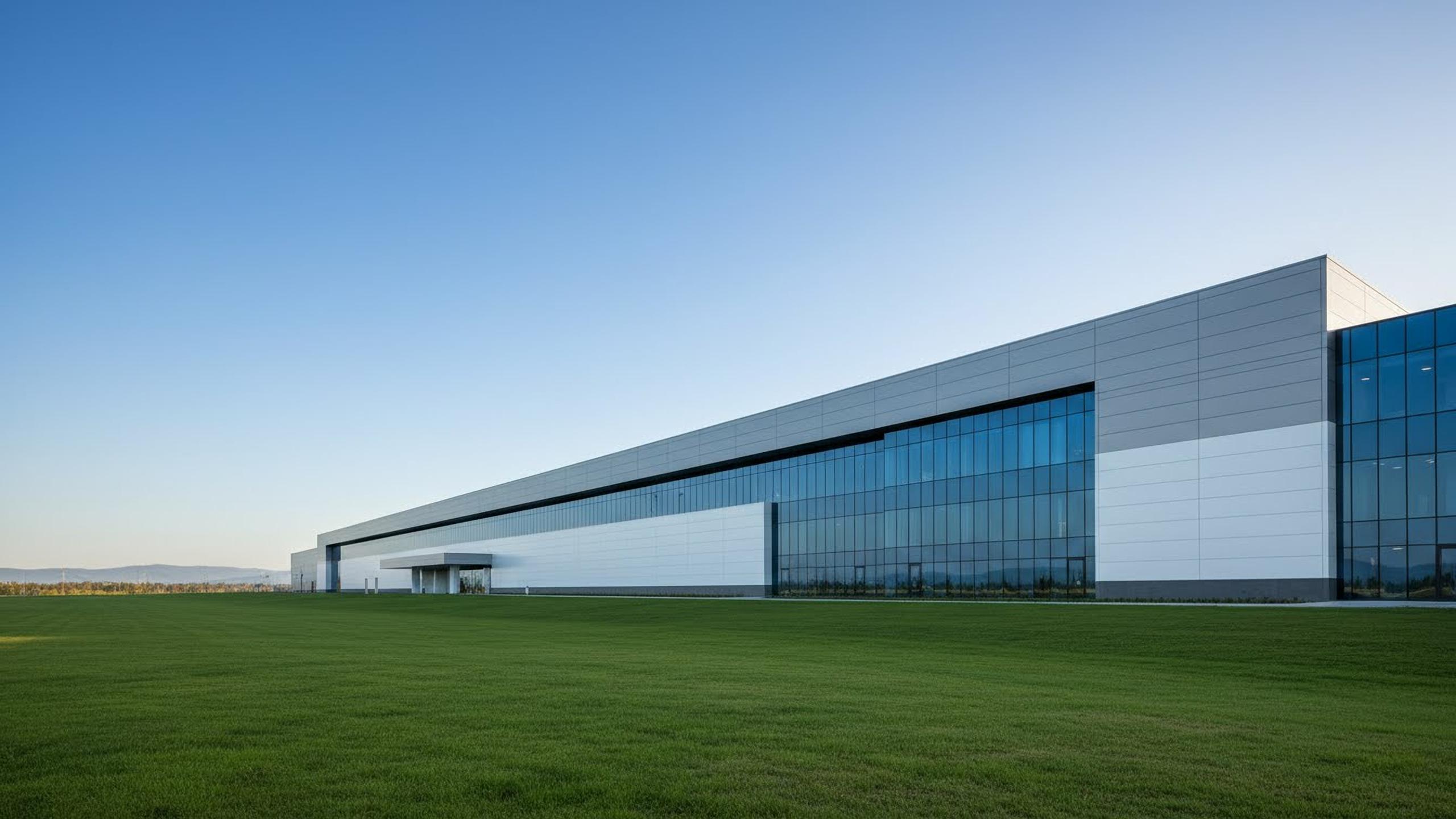








Demystifying the AI Gigafactory
Forget images of assembly lines and physical products. An AI Gigafactory is not a factory in the traditional sense. Instead, think of it as a supercharged data centre, a massive hub of computing power specifically designed for the demanding work of building
and training the next generation of artificial intelligence. These facilities will house immense computational resources, including more than 100,000 advanced AI processors, alongside the necessary software, high-speed connectivity, and energy-efficient infrastructure. Their purpose is to handle the entire lifecycle of the most advanced AI models, from initial development to training on vast datasets—a process that is currently dominated by a handful of tech giants outside of Europe. These gigafactories are a significant step up from the EU's existing 'AI Factories,' which are smaller-scale supercomputing centres.
Following the €30 Billion Investment
The eye-watering €30 billion figure represents a strategic blend of public and private funding designed to jumpstart Europe's capabilities. The plan, launched in July 2026, involves up to €10 billion in public funds from the EU and participating member states. This initial investment is designed to 'unlock' or attract an additional €20 billion or more from private companies and investors. The entire initiative is coordinated by the European High-Performance Computing Joint Undertaking (EuroHPC JU), a partnership entity that pools resources from the EU, various European countries, and private entities to build a world-class supercomputing ecosystem. The call for proposals aims to establish up to seven of these gigafactories across the continent, with 18 member states already committed to participating in the broader procurement program.
The Quest for Digital Sovereignty
At its core, this initiative is a geopolitical and economic strategy as much as it is a technological one. The primary goal is to achieve 'technological sovereignty' for Europe in the field of AI. For years, European researchers and companies have relied heavily on infrastructure owned by American and Chinese corporations to develop cutting-edge AI. This dependency creates bottlenecks and raises concerns about long-term competitiveness and strategic autonomy. By building its own world-class facilities, the EU aims to create a secure and independent ecosystem where innovation can flourish according to European rules and values, including the principles outlined in its landmark AI Act. It is a clear statement of intent: Europe wants to be a creator of foundational AI technology, not just a consumer of it.
Powering a New Wave of Innovation
The intended beneficiaries of this massive investment are not just large corporations. A key objective of the AI Gigafactories is to democratise access to elite-level computing power. This means that startups, small and medium-sized enterprises (SMEs), academic researchers, and public sector organisations will have the opportunity to access the kind of infrastructure that was previously out of reach. By providing these resources, the EU hopes to foster a vibrant ecosystem where smaller players can develop, test, and scale their own AI models and applications. This could lead to breakthroughs in numerous sectors, from healthcare and climate modelling to advanced manufacturing and public services, driving productivity and innovation across the European economy.
The Road Ahead and Potential Hurdles
The timeline for this ambitious project is aggressive. Applications from consortia to build and operate the gigafactories are due by November 2026, with decisions expected in early 2027. Once contracts are signed, the selected projects are expected to become operational within 18 months. However, the path is not without challenges. The global competition for AI talent and specialised hardware, like advanced processors from companies such as NVIDIA and AMD, remains fierce. Furthermore, ensuring these massive data centres are energy-efficient and sustainable will be a critical test. The success of the AI Gigafactories will depend not only on building the infrastructure but also on creating the right conditions for a broad community of innovators to use it effectively.